
Wir alle lieben Essen, oder? Ich meine, es wäre komisch, wenn du es nicht genießen würdest, dreimal am Tag in dein Lieblingsessen zu beißen (oder öfter, wenn du ich bist!). Egal, ob Sie an Ihrem Schreibtisch zu Mittag essen oder mit einer Gruppe von Freunden an einem trendigen Ort in Ihrer Nachbarschaft sitzen, Essen bereitet uns immense Freude.

Trotz der unglaublichen aromen, die aus unseren lieblingsgerichten strömen, bedrohen viele von ihnen unsere umwelt, tragen zum klimawandel bei und tragen zu einem bereits schlimmen problem der wasserknappheit auf der ganzen welt (einschließlich Der uSA!) Bei.
Die gute Nachricht ist, dass es einige erstaunliche Unternehmen gibt, die diese Probleme direkt angehen. Mehr denn je befindet sich die Lebensmittelindustrie in einem rasanten Wandel. Viele nennen dies den Beginn einer Ära des „Future Food“.
Sie haben die Möglichkeit, an einigen der am schnellsten wachsenden und innovativsten Trends teilzunehmen, die die Zukunft unserer Lebensmittel prägen werden. Also schnallen Sie sich an und machen Sie sich bereit für einen Blick auf fünf futuristische Lebensmittel, die Sie Ihrer Feinschmecker-Bucket-Liste hinzufügen sollten:
Lionfish: Unterwasser-Serienmörder
Diese verrückten Fische wurden versehentlich in nicht einheimische Gewässer in den USA eingeführt und tun, was die ersten amerikanischen Siedler taten – sie übernehmen die Macht, indem sie die Eingeborenen töten!
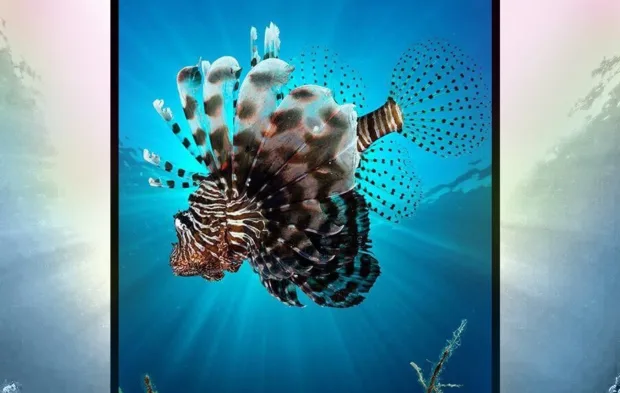
Mit einem unersättlichen appetit, fast keinen bekannten raubtieren und giftigen flossenstrahlen sind rotfeuerfische eine zerstörerische kraft, die das gesamte unterwasserökosystem bedroht. Betrachten sie sie als den Donald Trump des ozeans. feuerfische, Die als „eine der aggressivsten invasivsten arten der welt“ beschrieben werden, richten im osten der vereinigten staaten und in Der Karibik verheerende Schäden an und dezimieren fischpopulationen und korallenriffökosysteme.
Feuerfische können an einem Tag bis zum Zehnfachen ihres Gewichts fressen.
Erstaunlicherweise können Rotfeuerfische an einem Tag das Zehnfache ihres Gewichts fressen. (Ich schätze also, es macht Sinn, dass sie Florida als Lebensraum wählen würden …) Das bedeutet, dass diese Fische jede Minute jeden Tag riesige Mengen an Fisch fressen und Meereslebewesen in großem Umfang bedrohen.
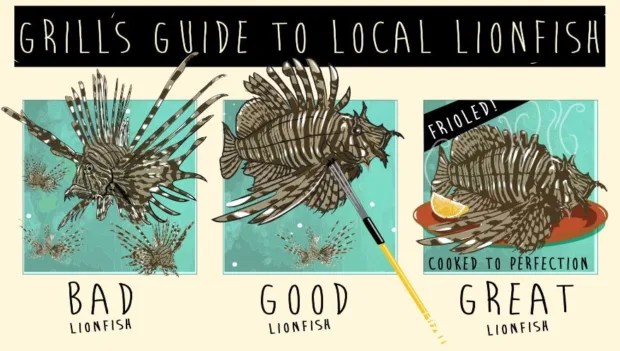
Glücklicherweise sind Rotfeuerfische eigentlich ziemlich lecker. Wenn die Menschen mit dieser Fischart vertrauter werden und anfangen, sie in ihren Restaurants und Supermärkten zu verlangen, werden wir in der Lage sein, diese zerstörerische Art aus unseren Gewässern zu entfernen und dazu beizutragen, einen nachhaltigen Weg zum Fischkonsum wiederherzustellen.
Gastronom Ryan Chadwick wurde kürzlich in forbes Über sein florierendes restaurantimperium und darüber, wie rotfeuerfische einen großen teil seines erfolgs ausmachten, vorgestellt. zu den rezepten für feuerfische gehören frittieren, ceviche, jerky, grillen und Sashimi. seien sie also nicht überrascht, wenn sie in naher zukunft rotfeuerfische auf der speisekarte ihres lieblingsrestaurants sehen – und Wenn sie es tun, bestellen sie es auf jeden fall!
The Impossible Burger: Bloody, Delicious, and 100% Plant-based
For most of us, we grew up eating burgers. Whether at a friend’s birthday party, a backyard BBQ with friends, or even fancy restaurants, burgers have been a staple of our American culture. Few would ever think of tinkering with such a powerful brand, but the creators of Impossible Foods set out to do just that. This burger, however, is made entirely from plants. And yet, it bleeds.
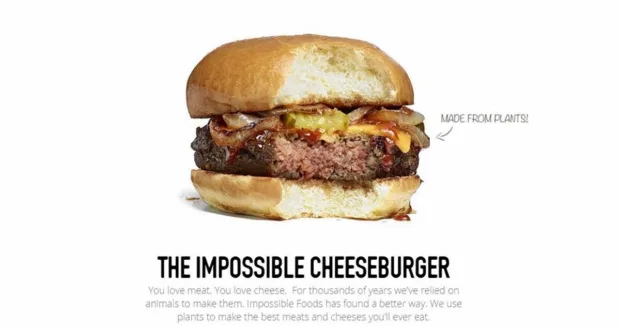
Huh!? Come again? How could anyone do the impossible and create a burger made from plants that tastes just as good as burgers made from cows? Well, the Silicon Valley folks at IB did just that.
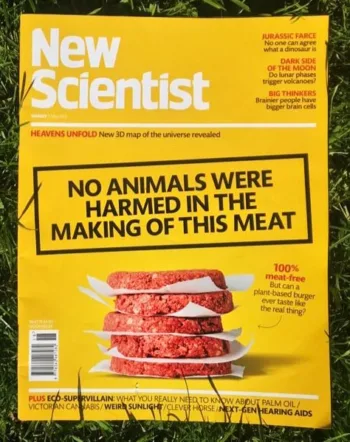
Don’t just take my word for it. Ask celebrity Chef David Chang (founder of the Momofuku restaurant empire), a purveyor of foie gras, pork belly, and just about every other kind of meat on the planet, what he thought when he sunk his teeth into this juicy miracle:
“Today I tasted the future and it was vegan: this burger was juicy/bloody and had real texture like beef. But more delicious and way better for the planet. I can’t really comprehend its impact quite yet…but I think it might change the whole game.” – Chef David Chang
The implications of The Impossible Burger are hard to comprehend. Right now, it takes over 600 gallons of water to make ONE hamburger. Wow. The Impossible Burger doesn’t use animals, so they can make it using 95% less land, 74% less water, and 87% less greenhouse gases. It also avoids you having to ingest any hormones or antibiotics (that’ll save you a lot of $ at the doctor’s office in future years!).
It’s now available at White Castle, TGI Fridays, and Bareburger. Add this baby to your foodie bucket list, you won’t be sorry. Just remember to thank me later 😉
PopShrimp®: Once You Pop, You Won’t Stop
Did you know that the USA recently approved consumption of shrimp fed with pig feces. Yep, you read that right. Pig $hit! Who woulda thought ordering a shrimp cocktail was so damn dirty? If you need more reasons to avoid shrimp, much of the shrimp we eat is peeled (the legs and head removed) by slaves (as young as three years old…) in Asian shrimping slave-labor camps.
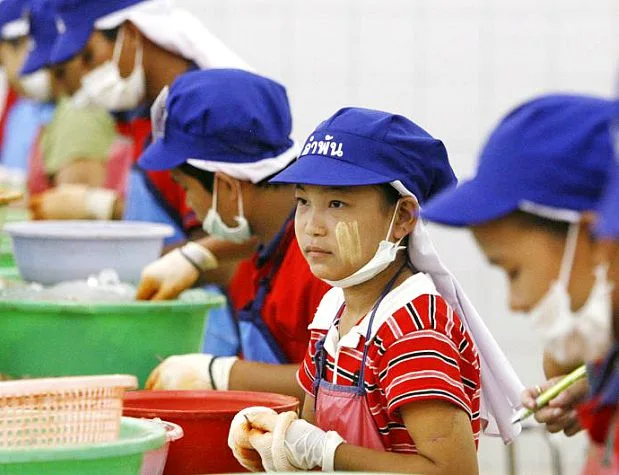
And yet, shrimp is the most valuable traded marine product in the world. Over 10 billion dollars worth of shrimp will be sold this year alone.
Oh, and did you know that the carbon footprint of shrimp is TEN TIMES greater than for beef? Yup. In order to grow shrimp, companies are burning rainforest wetlands (killing all the life and biodiversity, while releasing thousands of years of stored carbon) and growing shrimp in the swamp that’s left behind. And because growing shrimp creates so much pollution, the land quickly becomes so toxic that it can’t sustain life, so they have to start over in another area of the rainforest every four to five years. Talk about destructive!
On top of that, shrimp is really unhealthy. Because the little creatures get so sick when they’re farmed this way, the farmers pump them full of up to eight types of antibiotics per shrimp, creating antibiotic-resistant bacteria that you then eat. Yuk!
Think wild shrimp is any better? Think again. Wild shrimp has among the worst bycatch rates in the industry. That means that shrimpers nets catch and inadvertently kill thousands of turtles, sharks — even dolphins. Not to mention that lots of farmed shrimp producers deliberately mislabel their product as ‘wild caught’ so they can charge more.
But there’s good news…
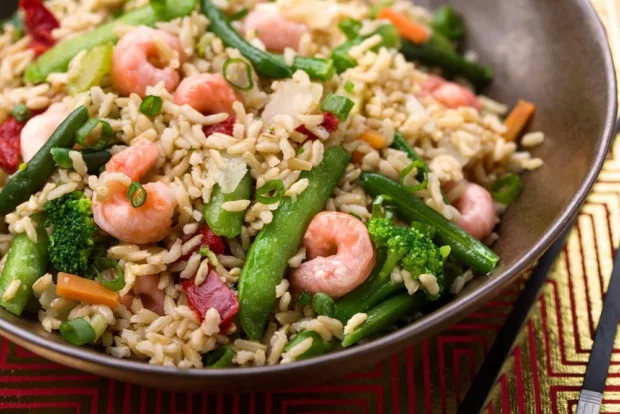
Fortunately, there’s a company doing something about this problem that’ll allow us to keep eating these tasty little critters. New Wave Foods, run by two kicka$$ women, is engineering a better shrimp with texture technology that allows them to create a superior product without sacrificing taste. It’s actual shrimp, grown in a lab. Not only does it avoid pig feces and slavery, but when they grow the shrimp, they also strip out the cholesterol and allergens. Pretty cool!
Google has already started placing orders for their office cafeterias, and other companies are starting to line up as well. It won’t be long before PopShrimps will make their way into your next bowl of Pad Thai. Who knew doing the right thing would taste so good?!
Meatballs: Cultured, of Course!
Memphis Meats has created the first cultured meatball. Now, you might be asking yourself, “what the heck is a cultured meatball?” We’ll get to that. But first, let’s find out why they exist in the first place. As you know by now, raising animals to feed us is a very costly process, both for the environment and for the animals. Given the issues we’re facing around climate change and the horrors of factory farming, cutting-edge companies like MM are bushwhacking their way into the Food Hall of Fame by creating the same great taste you’re used to, but without all the crummy stuff previously needed to deliver us the goodness of meatball subs.
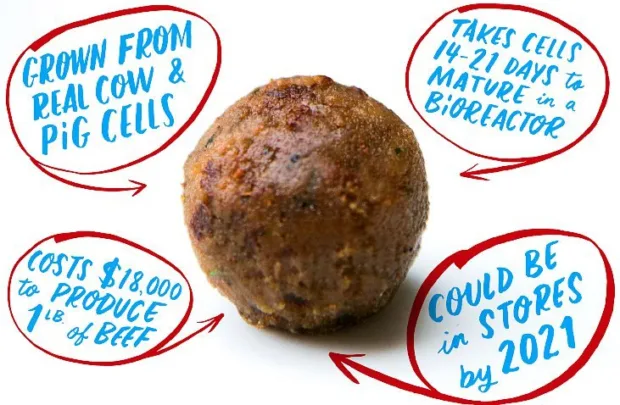
MM makes the meatballs by taking “cultured” cells from an actual cow or pig and uses technology to recreate the same (cellularly-identical) beef and pork we’d get if we just raised and slaughtered the animals on a farm.
The possibility of growing meat in a lab has long captured the public imagination. Winston Churchill suggested in 1931: “We shall escape the absurdity of growing a whole chicken in order to eat the breast or wing, by growing these parts separately under a suitable medium.”
The company thinks it’s about a decade away from being able to produce these delicious treats on a global scale, so you’ll have to wait a bit until you can sink your teeth in to these bad boys. Until then, start sharpening your knives — it’s gonna be a tasty future!
Pea Milk: Better Than Animal Milk in Every. Single. Way.
Let me start by asking you a question. If you could drink milk that had eight times the amount of protein as almond milk, ½ the sugar as regular milk, and didn’t require cows on factory farms to be harmed in the process, would you try it? My guess is the answer is yes. Now, if you found out that it also tastes amazing, and has 50% more calcium than milk, would you drink it on the regular? My guess is the answer is ‘f&ck yes’!
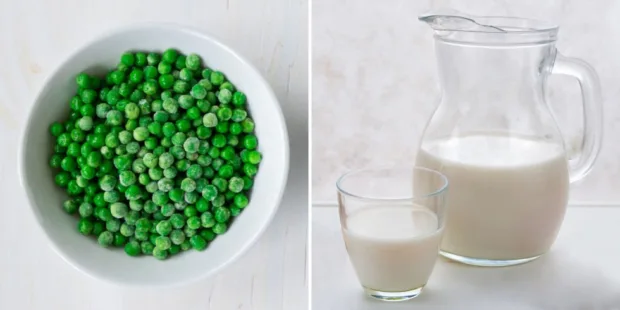
Pea milk has 8x the protein, half the sugar, and 50% more calcium than cow milk.
Welcome to the deliciousness that is Ripple Foods. From the same founder that brought you Method (listed as one of the fastest growing companies in America in the last 10 years), Adam Lowry needed a new challenge. When his daughter started asking him to bring home more “vegetable milk,” Ripple Foods was born.
In addition to all the positive benefits of drinking their pea milk, Ripple’s bottles are also made from 100% post-consumer recycled plastic; and that plastic can be recycled in over 99% of households. It also requires 93% less water than milk (it takes 1000 gallons of water to make 1 gallon on dairy milk). Oh, and they only use non-GMO ingredients. Talk about a ripple effect! That sound you just heard was the mic drop.
Expect to see this incredible beverage on shelves across the country very soon, and you can likely already find it in your local Target store. So, before you pour regular old milk on your next bowl of cereal, make sure you remember to Ripple it up instead.
The future of food has never been so exciting. For us, for the planet, and for the animals. Check back in with us in the coming weeks, as we plan to post more on the deliciousness coming out of the incredible businesses taking our world by storm…
Which of these delicious foods are you most excited to try?






I’m honestly thinking if I should be alarmed or excited about these foods. I must agree that they are amazing and these “lab-grown meals” are moving from science fiction to reality.
I would never eat lionfish, or any fish for any matter… Just because it’s invasive doesn’t make it suddenly have the pain-feeling and reasoning capabilities of a cabbage. It’s still fish. It’s ALIVE!
Great piece.. I know some people will judge, especially those who eat animals… Don’t be judging vegans who like fake meat. Who cares as long as it’s cruelty-free! For you who don’t live where there are good options, you can order online. My neighbor introduced me to vegan meat…at first I was skeptical…but it was sooooo good!
The impossible burger is the FUTURE!!! People need to understand something. This just isn’t an “I’m vegan, I love animals” product. The mass production of animals and their consumption is not sustainable on this planet. Not taking a single other burden on the environment into account do you people know the shear amount of water it takes to grow a cow compared to crops? It’s astronomical and completely unsustainable. Here are some statistics from our government. It takes around 110 gallons of water to grow one pound of corn. In just a few months one single cow can consume over 1000 pounds of corn. 1000 POUNDS! For a single quarter pound of hamburger you want to know how much water it takes to make it? Around 460 gallons. So for a single pound of beef it consumes 1,840 gallons of water. A SINGLE POUND and beyond that most of it doesn’t even get consumed by you considering the fat content that gets burned off during cooking. This issue is more than just ethics about animals and not wanting to eat meat. It is about finding an environmentally sustainable way to feed the world’s population throughout the years to come.
No… This is so wrong! How can we still be vegan if we ate another alive being whether it’s invasive or not? Rodents are invasive. Should we eat them too? What about people who invade other people’s lives? They’re invasive too. Are they also okay to eat? Just no!!
Okay, I am seriously excited about these! I heard about them a while ago, but what I really want to know is when I can find these in stores, especially the vegan shrimp!
The impossible burger sounds yummy but looks fat. How about some nutrition information… How much protein does it have? Because even a cheap McDonald’s burger has around 35g of protein. LOL
Even if you were to accept that killing the invasive species would be morally acceptable because it saves more animals and thus the good outweighs the bad, I fail to see why you’d need to eat it. Not least because, as you say, catching these fish would result in other fish being caught (and killed) as bycatch. It seems to me that encouraging the eating of invasive species is just another way for omnis to pretend their diet is ethical: “I only eat invasive species” is really no different from “I only eat humane meat”.
Informative article!
Seriously?! I didn’t realize shrimps are dirty… My bad.
Yeah, these foods are really amazing! Thanks for the awesome list!
And oh, I want to taste the “impossible” LOL