
Unless you were raised by wolves, chances are you grew up enthralled with Disney Princesses. You most likely had a favorite Princess and maybe even dressed up like her, enacted scenes from your most beloved movie, and awaited your Prince Charming.
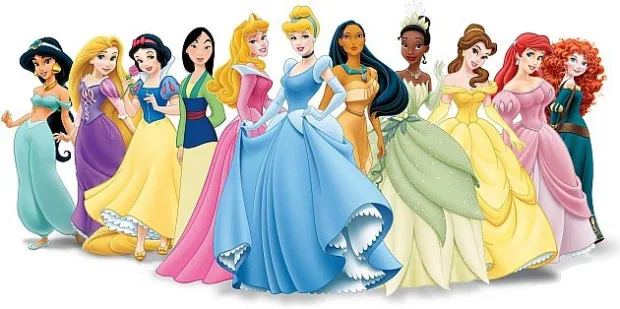
But recent speculation about the Disney Princess effect suggests that we may actually have been better off raised by wolves. To truly understand why Disney Princesses can be so detrimental to a girl’s development, we must first understand the three main cycles in the Disney Princess franchise:
Classics 1937 – 1959: This era of Disney Princesses included the movies Snow White, Cinderella, and Sleeping Beauty. The Princesses in these films were subordinate, gentle, quiet, beautiful, caucasian, and took the backseats to their own stories while they awaited their Prince. In other words, they were seen and not heard, and prized for their beauty alone.
Pretty girls don’t even need to be conscious to get some hot Prince action.
The older (and therefore supposedly less attractive) women were cruel. They were filled with jealousy and hatred, all because of the competition for the one perfect (and rich) Prince’s affections. Now that I think of it, The Bachelor TV show mimics many aspects of this theme.
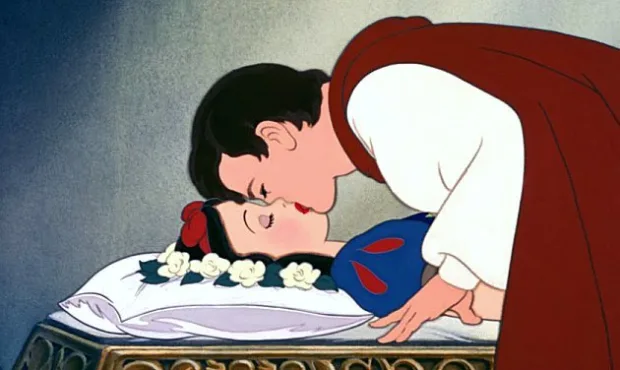
Snow White: Her 14-year-old burgeoning sexuality (and snow white skin) is a threat to another woman, so she’s killed. Her only asset, her beauty, is what saves her in the end. At first, it may seem terrible, being so beautiful that other women get jealous enough to try to kill you. But don’t worry, once your beauty attracts a man, he’ll protect you.
Cinderella: This 19-year-old blonde is saved from terrible living conditions, not by hard work, but by a Prince. He does this, not because her personality impressed him, but because she is young and beautiful. So, ladies, if you’re young and beautiful enough, don’t try to work hard or develop yourself to get out of a bad situation. Instead, just rely on your beauty and let a rich man save you.
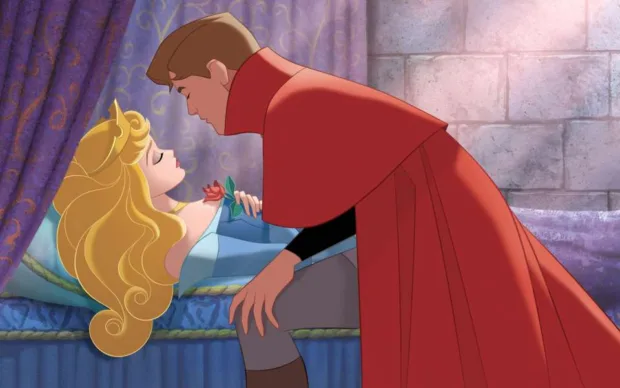
Sleeping Beauty: Betrothed at birth to solidify a political position, she is then killed by another woman out of jealousy and spite. Her owner… ahem… fiance, saves her with a kiss, showing that pretty girls don’t even need to be conscious to get some hot Prince action. Again, sex is her only salvation. Oh, and she got only 18 lines of dialogue in the whole film.
The Princesses were seen and not heard, and prized for their beauty alone, always in competition with nasty older women for one Prince’s attention.
Overall Lesson: Youth trumps all. Older women are always less attractive (even very beautiful women) than teenage girls, and that makes them bitter. You don’t need a personality to win the best man. The most important thing in life is to beat our other women for the richest man’s affections.
Renaissance 1989 – 1992: It took 30 years for Disney to release another cycle of Princesses. When they did, they were praised by many who saw Ariel’s rebelliousness as the antidote to the subordinate, dreamy Princesses of the past (despite the fact that she gave up her home, friends, and fins, to get married to a fickle Prince, at age 16). This was followed up with Beauty and the Beast (where she falls for her captor) and Aladdin (where he keeps saving them from her f*uckups). However, the core focus of these scantily-clad Princess’s stories was, ultimately, to be sexy and win a wealthy husband — at any cost.
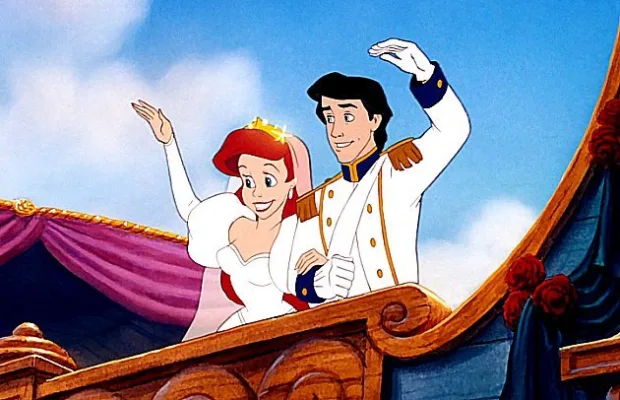
The Little Mermaid: Ariel’s only two options in life are the ones her father has laid out for her. An older, overweight woman (obviously, the villain) convinces her that to be sexually attractive to men, she should drastically change her physical appearance — so she does. The price is that she can no longer speak or sing (and singing was her greatest joy). No problem, as she has nothing of value to say, and the Prince clearly doesn’t care anyhow, since he decides to marry the mute Ariel.
So, in the end, she’s yet another tale of a girl being saved by a Prince. This time the Prince has a wandering eye (which he, of course, is not to blame for). The moral of the story is that giving up her family, home, biggest talent, and everything she knows was totally worth it because she is now owned by, and totally dependent on, a man (ie. –yay– happy ending). After all, it’s not as if he would have ever considered living under the sea with her.
Before Ariel trades in her voice for a pair of legs, Ursula sings a song to convince her to give up the goods. This gem of a verse seals the deal:
“You’ll have your looks, your pretty face
And don’t underestimate the importance of body language, ha!
The men up there don’t like a lot of blabber
They think a girl who gossips is a bore!
Yes, on land it’s much preferred for ladies not to say a word
And after all dear, what is idle prattle for?
Come on, they’re not all that impressed with conversation
True gentlemen avoid it when they can
But they dote and swoon and fawn
On a lady who’s withdrawn
It’s she who holds her tongue who get’s a man.”
Beauty and the Beast: She saves a Prince’s life — not with her wit or strength (because she doesn’t have either of those things), but with her only asset: her sexuality. Proving that appearances don’t matter; what matters is what’s inside your heart. Unless you’re a girl, of course.
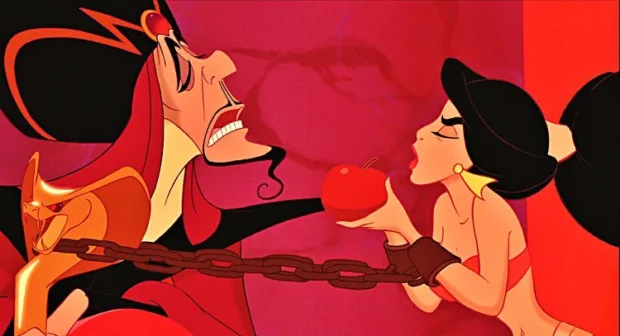
Aladdin: As a 15-year-old girl, her only worth was her marriageability, and the longer she waited to marry whomever her father demanded, the more trouble she caused. She ends up enslaved by a powerful man and is only saved by marrying a shallow and possessive man pretending to be rich (who refers to her as a prize to be won, and repeatedly assumes she must be shallow). “A liar who agrees that I am only a rich, hot prize to be won? GO JUMP OFF A BALCONY! Oh, you have a magic carpet? Never mind, let me hop on that!”
Lesson: Give up everything and make your life revolve around marrying a rich man. Then, the rich man will give you money and therefore fulfill your dreams. Oh, and always wear bikini tops to be sexy.
New Age 1995 – 2009: This cycle featured Mulan, Pocahontas, and the Princess and the Frog. These Princesses were more complex with hobbies, skills, and careers, and they were often the heroines of the story. However, these Princesses mimicked the Renaissance Princesses in that at the end of the day, they just wanted to get married.
Lesson: Despite anything else, a woman’s greatest accomplishment in life is having a rich or powerful man take you away and claim you as his wife (even if he’s dangerously insecure). Seeing any patterns here?
So have the Disney Princesses truly fucked us up? Are we unhappy because we don’t have an 18″ waist? Do we feel competitive with other women because of this messed-up messaging? And speaking of this Prince, why are all the women always in competition for this one guy who only seems to care about youth and beauty? Haven’t they heard? There’s more than one (rich) fish in the sea!
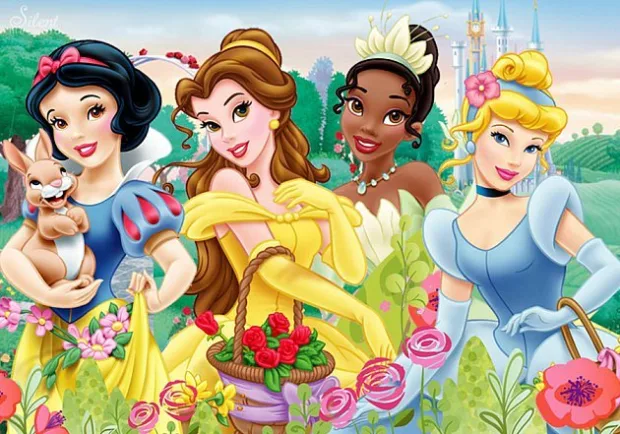
If we were to adhere to the Disney Princess formula, all we have to do to get our happy ending is to be the most extraordinarily beautiful and young — beat out other women — and perhaps completely give up our voice? Hmmm… Not very subtle on the sexism, guys.
Disney movies help create a society that sees women as beautiful only when they are impossibly thin and overwhelmingly white.
But it’s more than that. A study conducted by Brigham Young University who chronicled the responses of 198 preschoolers found that children who are exposed to Disney Princess media are more likely to buy into sexist gender stereotypes. Long-lasting effects on young girls included higher risk of unhealthy body image and loss of confidence.
Disney has indeed made efforts to update their Princesses to reflect modern sentiments, but they’ve made a few errors along the way. A study of the dialogue in the Disney Princess franchise have uncovered a startling trend: Disney Princesses have had a smaller percentage of spoken words in the 90s films verses the original ones. So, while women in Disney films were becoming more independent and self-realizing, they were also speaking less than their male counterparts.
The study also suggests that this is partly because of the larger cast of characters featured in the newer movies. While the first cycle of Disney Princess movies only had a handful of characters, newer films are saturated with a massive cast, and because we still see men as the default, many of these minor characters are men. Need a shop keeper? Jolly people in the pub? A sidekick? Just add in a few more men with some major or minor speaking roles and you have yourself a movie with male-dominated dialogue.
This study didn’t just focus on how many words the characters said, but what was said as well. They analyzed compliments, and here we see a positive trend. During the Classics stage, the female characters received 55% of compliments based on their appearances and 11% based on their skills. In the New Age era, female characters are complimented on their appearance 22% of the time and on their skills 40% of the time.
With the most recent batch of Disney Princess movies, the dialogue trend has been reversed. Frozen, Brave, and Tangled have been more judicious about the speaking roles between the genders. This newest cycle features Princesses who are independent, talented, and are often the drivers of their own narratives. In fact, in a dramatic change of events from the earliest Princesses, these modern ones often save the men. In Frozen, the traditional love story is turned on its head when true love is revealed to be the love between sisters.
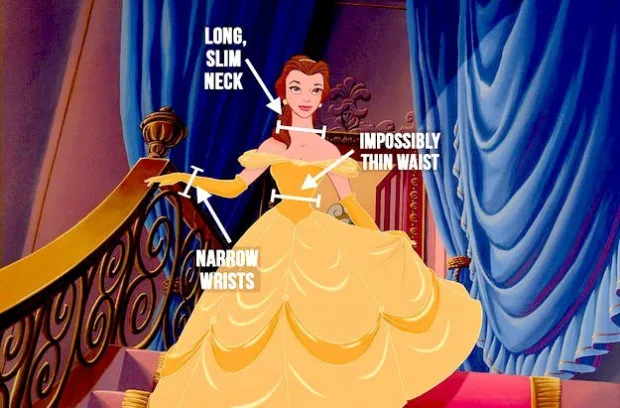
But Disney could still very well be f*cking us up. A major motif in the feminism of today is unrealistic body image, and Disney does very little to address this. Impossible body proportions in Disney Princesses, and this study found that the ratios of women’s bodies to men’s in modern Disney movies reinforce the sexist notion that women are beautiful only when they are impossibly thin, with delicate caucasian facial features.
Look, I don’t think we should lose our heads over Disney Princess films. After all, these films are meant to entertain and little more. That being said, children aren’t capable of understanding the potential effects it may have on their self-image and, clearly, internalize these sexist messages. So what’s the answer? As it often boils down to, being aware and educated, and voting with our dollars is really the best we can do.


People are acting so extreme about sexism and feminism and it’s starting to drive me nuts.
The thing with Disney Princess movies is that it’s just a reflection of how life is back in that era. Let’s face it, it’s almost history that monarchy is almost the top priority to wed for women. Disney’s purpose for creating movies like this is to entertain, just like any other movies out there that talks about history, women were the same thing. These are things that kids watch and I’m sure in time they’ll understand that being a princess isn’t anything close to reality and so does a prince saving them from witches or evil queens.
It’s true that I never really processed anything like that when I watched a Disney princess movie. It was nothing but pure entertainment for me but I wasn’t exactly interpreting it as deep as you want everyone to.
For christ’s sake, the only reason why these drawings have thin waste is because it’s a friggin’ cartoon. Disney has drawing patterns and let’s face the fact that there isn’t any fat princess to begin with.
OMG, point taken that there aren’t any fat princesses but that’s just mean.
I don’t know what I’ve just read but this is quite funny. I just enjoyed watching Disney back in the days but never really thought that life as a real woman was the same thing. I mean, it’s a cartoon. Never have I ever had the mentality that a prince will sweep me off my feet at some point in my life and I will live happily ever after. Whoever assumed that their life was similar to these princesses are utterly stupid and fairly dumb. But then, we do have people like that out there that’s why articles like this are written. But seriously, life isn’t a fantasy and you’ll probably meet a frog than a prince. There isn’t really any harm in letting people enjoy their childhood trying to dress up like Disney Princesses.
Disney is lame. We got little girls dressing up as one and they grow up wanting to be one. We put crazy ideas in these little girl’s head. It’s so unrealistic.
Who cares if these princesses have very few dialogues especially the new ones? Moana doesn’t even have a prince but she’s strong willed. Be careful when you talk about Disney princesses because there’s more than just Snow White, Cinderella, etc., now.
Hmm.. I agree. It’s not all that bad really.
I don’t like the early versions of Disney Princesses. They all act like damsels in distress and it’s not the type of thing girls nowadays should be watching. However, I do enjoy the fact that the latest ones are strong-willed and no longer depend “too much” on their prince. We see women who fight for what they deserve now, not ones that just sing, needs to be rescued and pampered by forest animals. Not to mention the dreadful singing that doesn’t even pass as opera or whatever that high pitched sound is.
I love Tangled (Rapunzel) she’s so strong even though she did somehow need rescuing from Flynn Rider. But still, I think there’s nothing wrong with Disney Princess.
Even as a child, I loved Disney but never has it occurred to me that I have to be thin, young and beautiful to be accepted in society or to be able to find true love. I just loved Disney songs and that’s it!