
The first time someone called me a bitch was at a middle school ballet camp, a hotbed for divas and drama. I asked a girl if she could move down a bit to make room at the barre, and voila! I went from unassuming middle-schooler to bitch extraordinaire.
I hear the word bitch every day. It’s ingrained in our language, and we toss it at women all the time. We use it to describe women who don’t respond to catcalling, bosses who assign their employees to a hard task, or girls who turn down a date. What do these so-called “bitches” have in common? They all dared to assert themselves and stand up for their basic rights.

We use bitch to put down strong, assertive women. It’s the word we use when a woman steps out of the traditional feminine sphere. Men use it when women threaten the professional and social power they’ve monopolized for so long. Women use it against each other as well. It’s time to stop.

Like too many other insults, we direct bitch pretty much exclusively towards women. This presents a problem with the way our language makes us think about girls. It goes way back, too: bitch was first used in the 1400s. If there’s one thing I don’t want to have in common with Europe in the Middle Ages, it’s their views on women. And it’s not just the word bitch that we use to put women down. Slut shames women for their ability to say yes. Friendzone, uptight and frigid guilts women for their right to “no.” Bitch comes in when a woman tries to defend herself against these sexist standards and assert herself as an individual.
The word gives female assertiveness negative connotations. It perpetuates the myth that women always have to be nice, which prevents a lot of women from asserting themselves. Men who assert themselves in the workplace get promoted. Women who try to do the same get called a bitch behind their backs. Our language makes many women feel like they need to put everyone’s needs before their own to avoid the unholy title of Bitch. But bending over backwards to please everyone before yourself comes at the cost of your personal goals.
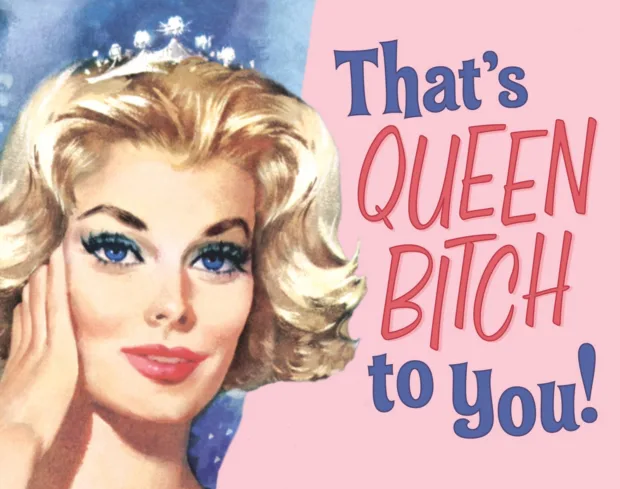
Some feminists have tried to re-appropriate the term. The founders of Bitch Magazine, for example, believe that the word should have positive meaning. It’s a step in the right direction, but society as a whole still views assertive women as bitchy in a bad way. To achieve any real progress, we need to start viewing assertive women as empowered, instead calling them unkind and bitchy.
The movement to reevaluate our view of assertive women has to start with us. Women are taught to be competitive with each other, starting with Disney. So, sadly, we don’t often help each other out in the workplace; but it’s time that changed.
Encourage other women to be assertive, and work to be more assertive yourself. Instead of tossing out the b-word when one of your coworkers asserts herself, respect her ability to go after her goals. Better yet–learn to do the same. Combining both these factors is the only way we’ll ever be able to affect any real change in women’s workplace experiences.
In a world where men continue to dominate most fields (especially the influential ones, like media, entertainment, tech, politics, and advertising), our language works against successful women. Girls grow up associating assertiveness with bitchiness, and try to act nicer. And while everyone should strive to be nice to others, we need to remind girls that it’s possible to be kind and assertive at once. It’s possible to be nice to others and still stand up for yourself, or go after your goals. Anyone who tries to call you a bitch for that is just wrong.
How do you respond to negative language against women? Sound off in the comments!





Just don’t accept any words on its face-value. Words don’t really have meaning on their own until it goes past our ears and into our mind. So, we must train our minds not to take any words as they are intended to.
Sometimes most things I do don’t really turn out fine, and I am called a bitch, especially when my relationship goes wrong. But I’m only human. Why do I need to offer my apologies with that?! And to whom will I say sorry?! I don’t even feel sorry my self!
Just now, after reading this, a guy on Facebook was constantly messaging me. The thing is, he was a high school friend that I had history with but it didn’t progress. After so many years, I graduated from college and now I’m a working lady, he added me on Facebook and we chatted for a while. Our chats consisted of updates that happened in our lives and me telling him that I’m currently dating this one special guy that I had deep feelings with. For some reason, he thinks that it’s okay to ask me out, even though I obviously told him that my heart belongs to someone else. He even invites me over to his flat, asking me if we could even go out for a drink, and so on. Most of the time I’ll leave his messages ‘seen’ on Facebook. But after a few days he’ll be saying hi again, as if I didn’t just ghost him for days. Not sure if it was my fault that made him feel like I was giving him a go signal, or that men are sometimes just very oblivious about the fact that some women don’t like cheating in relationships and that they should just f*ck off and leave taken women alone. I’m pretty sure I’ve told him dozens and dozens of times how I really love this guy that I’m dating and that I have no plans in meeting him or whatsoever, because that would mean that I’m trying to cheat. Men simply can’t understand simple messages telling them to F*CK OFF.
Wow, seriously, this has happened to me so many times. Some men really don’t know their boundaries!
That’s pretty lame of him. Maybe just block him? Who cares if he was an old friend or something. If he acts like that, he deserves to be blocked.
There are tons of guys out there who can’t take a hint. Thirsty ass men!!
Liberated women are the ones frequently called a bitch or something shaming. Because they often have a different lifestyle, or clothes, or hairstyles, they got to be called something that they do not really define them as they are, and it’s very unfair to them.
Just because I have a life, that doesn’t mean people around me can call me something I am not. See me walk into my house really late nearly every night? Why do you have that look in your face as if I’m doing something shameful?
Some girls on my work even call me a slut because I have commitment issues, and I always go for casual datings. But, it’s all good. I just don’t respond to slut-shaming because I know what works for me. If they have problems with me, they can always tell, but they must accept me as I am, though.
It’s ignorance for people to say it’s okay that we’re dragged down by others as long as we don’t get affected by it. The thing is, we normalize it whenever we do that. What about those who get affected?
I am called a bitch one night when I got drunk at a party. But I don’t mind calling me a ‘bitch,’ honestly, because I don’t mind getting wasted sometimes. I actually enjoy it!!!
Bitches (that is, female dogs) only give us the cutest, lovable puppies that we people do not deserve, who stay loyal and becomes man’s best friend. They don’t deserve to be used as a description of something unpleasant or offensive.
If dog’s can only understand and think, they will rise up against us. LOL!
I don’t give a fuzz with their narrow-minded thinking and whatever the hell they want to foist on the world. It’s only fair that as my opinion makes no difference to them, theirs doesn’t mean anything to me, I suppose. So, thanks but no thanks for calling me a bitch.