
It was a downpour in New York City that morning. Giant wet drops of monsoon-like rain, coating the concrete runways of the city, leaving Fashion Week more damp and frizzy than poised and refined. Hearst Tower erupts from the corner of 57th and 8th, diamond cut and regal against the signature skyline. The home of such publishing powerhouses as Cosmopolitan, Elle, O, and Bazaar, there is no slowing down due to rain.
In the building’s cafeteria, the rain is pattering against the thousands of glass panels. Steel support beams reach for the heavens, gleaming in the artificial light. Men and women in suits more expensive that most of the city’s rent prices make their way to the Starbucks-stocked cafeteria. Jill Filipovic takes a sip of her tea and laughs. “I guess coming into work isn’t so bad when there are shirtless male models there to greet you.” She laughs again.
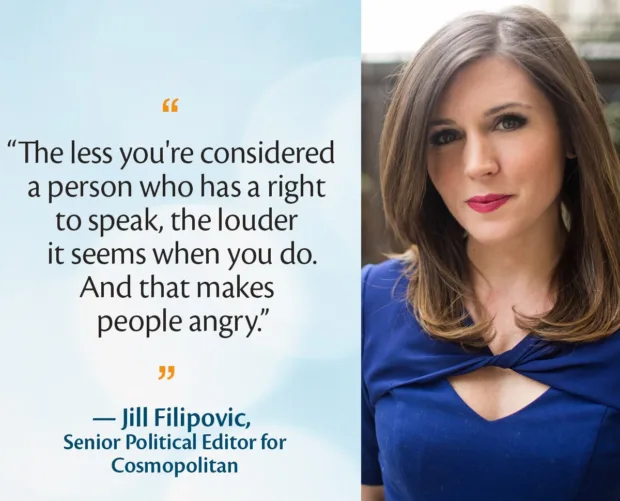
Filipovic is candid, like the older sister you never had, who you wished had told you that dating that guy who had a dragon tattoo on his back wasn’t the best idea. The cool older sister that you went to at age thirteen because you had no clue about sex and you know she’ll be real with you. She’s genuine, and her tone of voice reassures you that if she didn’t believe what she was saying, she wouldn’t have told you. You never have to worry that what she’s telling you is simply to hear herself talk; in all things, she finds a poignant idea to mention, that you never knew you needed to learn about until just then.
Filipovic is the former Senior Political Writer for Cosmopolitan.com, and also has weekly columns at The Guardian, Al Jazeera America, the Huffington Post, and the blog, Feministe. Although she received a law degree from New York University, Filipovic’s first love is writing, and has been since before she could walk. “I always wanted to be a writer. From the time I was a very small child, before I could write, I would dictate stories to my parents and to my aunt, these long narratives.”
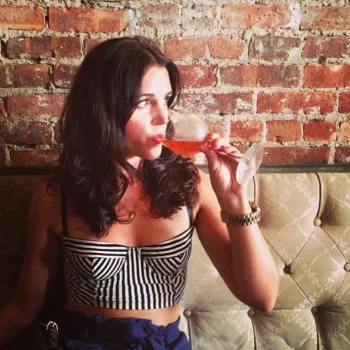
Filipovic started college at New York University in August of 2001, studying journalism. Not even a month later, the most devastating terrorist attack to happen on American soil occurred; the plane hijackings and destruction of the World Trade Center. Filipovic’s campus was less than three miles away.
The media’s handling of 9/11 and the Iraq war left a terrible taste her mouth. She was disenchanted from the world of journalism, an industry that the world relies on for the truth. “The media took Bush administration statements at face value without doing any kind of individual corroboration and sold this narrative to the American public. It ended up years later being obvious that the line was totally false.”
She shifted her gears more towards law and politics, focusing on international women’s rights, and put her dream of a career in writing on the backburner. Filipovic’s goal was to help evolve the legal frameworks around legal rights and access to abortion and contraception in countries like Brazil, where abortion is against the law.
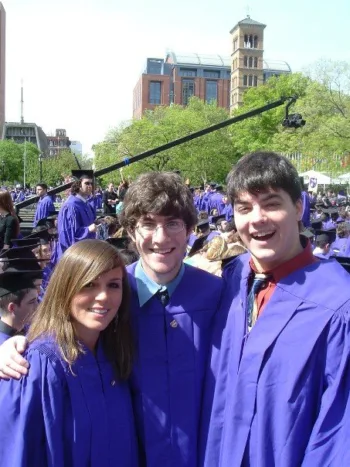
Almost immediately into law school, she realized this path of advocacy wasn’t for her. “I think my brain just kind of works in the way they teach you, this sort of hyper rational, hyper logical way of thinking. It made a lot of sense to me,” Filipovic smirks, black painted nails drumming against her paper cup, “But I didn’t find it that exciting.”
To her, lawyers were polishing up a painting that activists had nearly completed, giving the final stamp of legality before the completed project saw gallery time. There was no frontline battle, no turpentine soaked skin to vouch for a job well earned. “I never felt as inspired by legal work as I did by writing.” While she longed for more of an activist position, Filipovic made the best of what she could, helping whomever she could. She received her law degree while doing freelance work and activity blogging.
Two hundred thousand dollars in debt, Filipovic took a job at a large law firm, doing pro bono and asylum work. She was also writing for The Guardian on the side. “Freelance is a constant hustle”, she remembers, as the hum of Hearst grows.
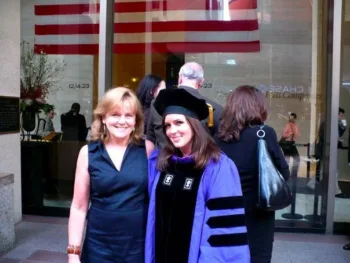
In a room full of powerful people eating kale and mango salads, discussing budgeting issues and human capital through their teeth, Filipovic takes her importance casually. She speaks with a breezy tone, like your best friend from high school that you’re reuniting with over coffee some years later. She looks to connect with you on any level; With something as monumental as abortion policies, or as seemingly trivial as how cute her nose piercing is and how you don’t know if your face could pull that off. Her air is of an author, a dedicated listener of stories, eager to retell them with the justice they deserve. And that’s precisely the road she took after hitting the mental Great Wall of China that stretched through her career of practicing law.
Filipovic practiced at a law firm for three and a half years before feeling expended. Her life was consumed by a cycle of writing and working, her hands constantly hooked up to a phone or a laptop. Her health was taking a hard hit as well. After a string of doctor and hospital visits, Filipovic was told that she had two out of place disks in her neck and spinal arthritis from all the stress she was dealing with from work. If she continued to go at the rate she was heading, she was going to need neck surgery. Her job had crossed the line from mentally draining her, to now becoming a physical issue as well, with long-term lasting effects.
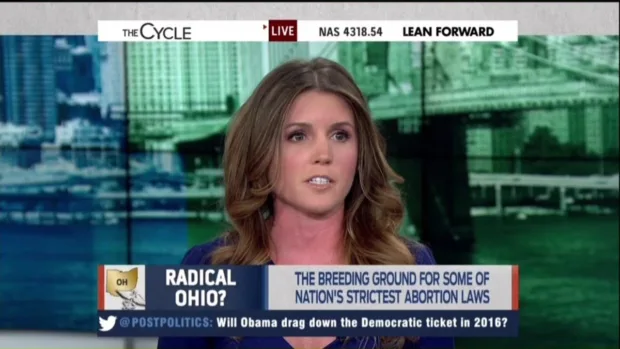
Around the same time, Filipovic found a lump in one of her breasts that her doctor thought was cancerous. Months were spent in doctors’ offices and in hospitals, trying to figure out a solution. She was in the hospital about to get a breast lump biopsy when clarity hit her like a tourist sightseeing bus; she couldn’t stand to practice law anymore.
“I’m sitting in this room waiting for a doctor to come stick a needle into the side of my boob, and I’m checking my fucking Blackberry and sending emails apologizing for not being in the office,” Hands above her shoulders in an uproar, Filipovic still can’t believe in insanity of her situation.
“I’m sitting here thinking that I might have breast cancer, and I’m replying to emails about a pharmaceutical company’s arbitration with another pharmaceutical company…there are no words for how little I care about this right now…there is not a unit of measure.” Her perspective shifted, taking into account all the money she invested into a legal education. While it was a topic she enjoyed, her second career in writing was where her heart was. Realizing the dimension of mortality, and the truth behind the cliché of “You only live once,” she closed the chapter on the duties as an attorney.
Leaving a steady job with a good income to set off for the unknown world of freelancing is a terrifying notion for anyone who wants to keep eating. It plagues the dreams of post graduates and those deeply rooted in their career, but always wanting more. It turns an ordinary, mapped-out life into a journey filled with uncertainty, speed bumps, and jeopardies. Sometimes the paths lead to reward, and sometimes they lead off of cliffs. But when it’s to follow a dream that was born the very second you were, the prize makes the risk pale in comparison. There is suddenly no other option.
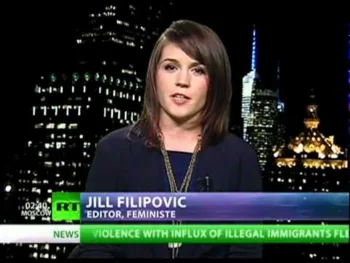
That’s exactly what Filipovic did. With unparalleled determination to continue to make a difference in the lives of those whose voices were being silenced, she swan dove into the life of a fulltime freelance journalist. She reached out to editors, including her editor at The Guardian, who offered her a position as a weekly columnist; a job they were prepared to offer Filipovic anyway, before she became a fulltime freelancer. The timing was impeccable. This opened the floodgates to the other news platforms she contributed to: Al Jazeera America, The Nation, and some social media consulting to help her pay the rent. She began to do fellowship work, and took her convective and resilient voice to help women outside the United States.
Filipovic’s dedication to global women’s rights shines through in even the most casual of mentions. Her eyes brighten, her shoulders perk, and her passion is palpable. She has been the recipient of many international fellowships, including writing abroad in Malawi and Brazil. There, she stood on the frontlines of the day-to-day struggles women face in countries that do nothing to protect them. But perhaps maybe one of her most poignant experiences came from when she was reporting in the Eastern Congo, and the first time she’s ever cried in front of a subject.
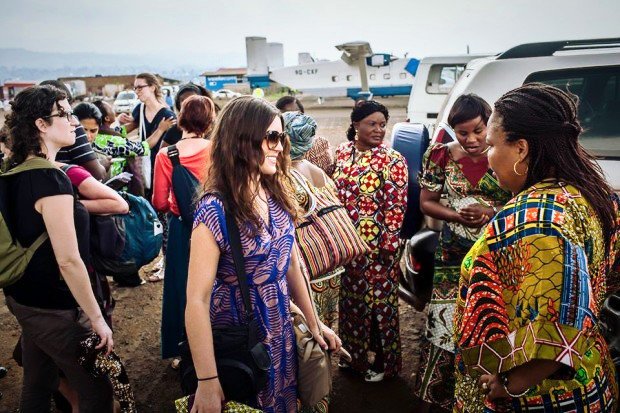
There has been a civil war going on in the Congo for over twenty years. It is one of the most deadly conflicts in modern history, with its total amount of fatalities reaching over 5.4 million to date. Almost all of those deaths are of civilians who were suffering from malaria, malnutrition, and pneumonia, intensified by displacements and unsanitary and over-crowded living conditions. Reporters and United Nations workers are no strangers to these war atrocities.
The Congo is especially deadly for women: more than 400,000 women are raped in the Congo each year. It isn’t anywhere near uncommon, and has become unfortunately normalized within the culture. But the familiarity of it does not take away from the importance of the issue. Filipovic, knowing the risks, journeyed to the East Congo to tell the stories of these women; stories the world needed to hear.
“There was this moment when were interviewing a lot of women at once, so there was probably thirty women in the room, and it was me and a couple other of journalists… and you’re sitting in this room,” Filipovic pauses for a moment, the memory holding her hand and bringing her back to the rear room of this restaurant deep within what’s labeled as the ‘Rape Capital of the World’.
“It’s hot, and it’s sweaty, and the electricity is kind of going in and out, it’s not particularly well lit. It’s packed. It’s just one right after the other, are telling you the worst things that you’ve ever heard.” She pauses, remembering.
“And there are translators. So one of the translators will translate it, and then a different translator will add another level. Like, one translator will say, ‘She said that she cried all the time,’ and then translator number two will say, ‘Actually, her exact words were, ‘My whole life was a river of tears.’’ Filipovic looks up, bringing herself back into New York, back into Hearst Tower, letting the moment recede back into its place in her memory. She exhales. On the far side of the cafeteria, a man in a navy pinstripe suit with a gold lapel pin lets out a hearty laugh.
“So sitting there for two hours and hearing that overflowing of sorrow, I was surprised by how emotionally difficult it was,” She brushes a piece of hair back from her face, “and what a privilege this job is, because there are people who will sit down with you and tell you all of that at some expense to their own mental health, and who are willing to do that because they believe that you can be a conduit for change and a voice to actually get attention to what they’re going through.” Filipovic’s voice is solemn, the emotional burden and imperative duty of her career flicker across her face. This task is not for the weak, for those not open to sacrifice. Coming up the mile long escalator, a woman in a magenta Chanel pantsuit is off to choose her preferred type of sushi (brown rice and quinoa available upon request).
It is the moments like these that Filipovic holds close to her, that help her solidify her role as a journalist. “It makes you realized what a responsibility this job is,” she says, wide brown eyes glimmering with understanding that anyone can make a difference if they use their words in the right way. In moments when a dream and a career collide head on, Filipovic pauses her constantly multitasking brain to appreciate them.
She finds them in the hushed calm after someone has told her that they lied about being raped to have a legal abortion, in the faces of Malawian children who want to dance with her, even in the ordinary divinity of getting a quote from a source that she knows exactly where to work into her piece. “This is not even a real job. And the fact that someone pays me for it, is pretty awesome,” she laughs, remembering that eighteen year old girl who came to New York to study journalism almost fourteen years ago.
Filipovic expends her words like they are weighed with gold, having mastered the balance between professionalism and warmth. But that doesn’t mean she’ll sit quietly in a corner while her beliefs are trampled. She isn’t afraid to shout against the crowd, truly because she doesn’t care if you think she’s being anything other than a warrior for change. Those who’ve worked with her can attest to her unrelenting fervor.
In 2001, Lauren Bruce founded Feministe, a blog exploring feminist practice and theory; one of the first of its kind. The blog took off, becoming a powerhouse of feminist ideology and a place where minds could melt and grow. In 2005, Bruce asked Filipovic to join this trailblazing staff.
“I approached Jill because I was thinking of asking someone to share the writing and administrative duties at Feministe“, Bruce explains. “I actually knew very little about her as a person. What I did know was that she was a very strong writer and very insightful on legal issues on her personal blog.”
Nothing could stop Filipovic’s love of writing and desire to make a difference in a broken world. This fervor and skill is what drew Bruce to her, and helped springboard her name as a journalist. “I had no idea she was a journalism student that was just starting at a very prestigious law school. It was kismet.”
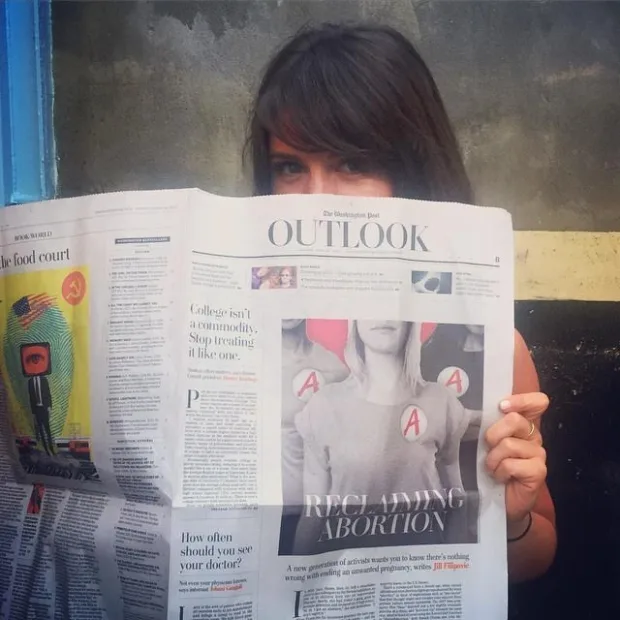
After two years of hustling through the freelance life, Filipovic heard that a woman she had gone to school with and worked on the student newspaper with, Amy Odell, had been brought in as Editor in Chief for Cosmopolitan online. So she did one of the bravest things you can do sometimes: just sending an email. Filipovic pitched Odell an idea for a weekly column, for which Odell responded with asking Filipovic to be the full time women’s rights editor that Cosmo was on the hunt for. Not wanting to sacrifice writing, Filipovic said no, having been an editor before and not finding it for her. Instead of moving on to the next opportunity, she asked if she could have a political writer title, being a staff writer as opposed to a high position editor. After interviewing again with Odell and speaking with Joanna Coles, the head Cosmopolitan Editor in Chief, the job was hers.
The echoing halls of Hearst begin to settle, dozens of pairs of leather shoes hurrying off to the elevators. Thirty seven floors skyward, the staff that works to create the print issues of Cosmo flit around the office, trying to create a balance between articles that make a difference to women, and ones that are for sheer laughs. Under their Jimmy Choo heels, Filipovic recounts some of her favorite and most poignant memories so far from her time at the largest women’s magazine in the nation.
For the political primaries of 2014, Cosmopolitan ran a campaign called “Cosmo Votes”, encouraging women to get out to the polls and cast their vote. This operation included a breakdown of which politicians are doing the most for women, divided up by state. It created an interactive an easy to understand rundown of the policies the politicians making a run in the primaries were creating. It encouraged women to make their opinions heard instead of leaving it up to someone else to do.
“We wanted an idea that was smart and incisive, but also resonated with a Cosmo audience”, says Filipovic. As an extra incentive, Cosmo had shirtless male models singing to women across the country that, ‘your vote is your voice’. “Yes, we want to tell you about all the political issues going on in the county, but really the issue is that we want young women to feel like they have a voice and like they are entitled to have political opinions.”
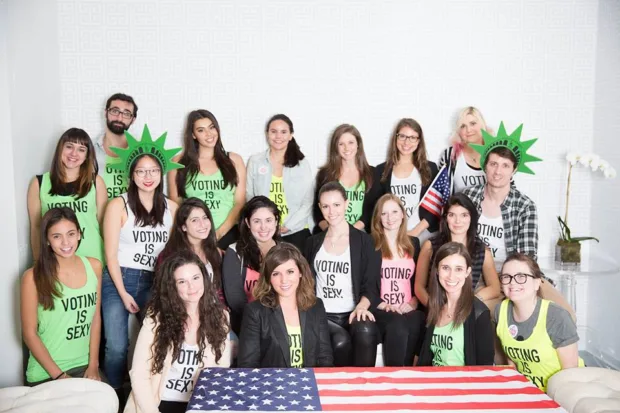
The campaign was a success, with thousands of women tweeting the Cosmopolitan Twitter account with pictures of themselves, proudly strutting the best accessory of the day: a navy blue “I voted” sticker. The articles spotlighting political figures received thousands of favorites and retweets, and were adorned with positive feedback. Filipovic couldn’t have been happier, even if she was spending her day covering the elections and not dancing with male models. At Cosmo, there’s always another opportunity.
Having the general public take you seriously as a professional writer can be difficult when you work for Cosmo. Many people still look upon to magazine as an outlet for cheesy celebrity stories and painfully inaccurate sex tips. And for the articles that don’t follow that suit? Why do they have to be looked at negatively?
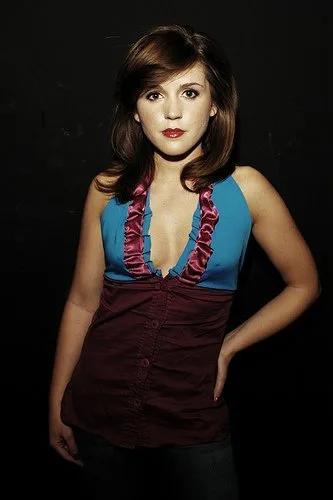
“When the stuff that’s seen as frivolous is treated as ‘women’s stuff’, it’s treated with a greater level of dismissiveness and disdain, than when it’s ‘men’s stuff’,” Filipovic notes. “It’s not as if sports are changing the world for the better.” The double standard within women’s magazines is a severe one. Since they contain content such as fashion and beauty, they rest of the content of the magazine becomes invalid. “Women in bikinis for a whole spread, no one seems to think that’s mindless.” Filipovic’s point is being well received. Cosmo’s coverage of sex has become revolutionary in that, there are less articles are about ’10 Ways to Please Your Man’, and more articles geared towards having good sex for yourself and not having to please a man in sacrifice to that. “I think telling women that it’s okay to want and have sex, that’s helping the greater good.”
The cafeteria is now barren, the steel growing colder by the loss of the crowds. Large faced watches and delicate string of pearls are now settled back into their office, leaving only Filipovic and her cardboard cup, drained of all of its tea. Her road to the front lines of the feminist movement was full of grooves and tribulations, false paths and pitfalls. She doesn’t regret her choices regarding law school, and only wishes she’d been more open to risks when she could take them. That’s the message she has to anyone who is terrified of pursuing what they love, out of fear they won’t get anywhere in life. “Be less afraid. Take more risks. Jumping without a parachute is scary, but the ground is not as far away as it looks.” Outside, the rain has just stopped falling.

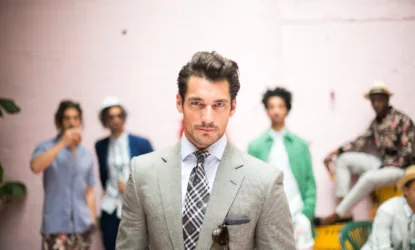
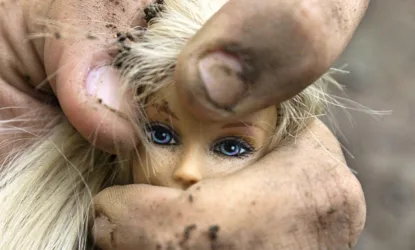

There has always been a bad connotation on the word “feminist”. Most people think that it’s too much of a leftist terminology that has spawned radical movements. Thus, not a lot of people, even those who advocate for gender equality and women empowerment, identify themselves as “feminist”. But they actually are.
Feminism is the very thought or act of fighting for the voice of the women who are marginalized, because of our paternalistic society, to be heard. It is the act of ensuring that women can vote, can go to school, have equal opportunity at work. It is when we ensure that the laws of the land gives both sides of the sexes an equal footing and the same treatment.
So regardless of our sex, gender, orientation, classes, or social status, for as long as we are one those who ensure that none of our mothers, sisters, aunts, girlfriends, female teachers and just about every female in the face of the earth are maligned, abused, discriminated and marginalized, then we are feminists. As Malala Yousafzai had recently stated in an interview with her by another young feminist Emma Watson, feminism is equality. There is nothing about the term nor its meaning that says otherwise.
wow! that is one long interview 😀 .I didn’t get tired of reading her story. Her story is so inspiring and i love her because she also value equality. she’s beautiful, smart and any girl who’ll read this will surely get motivated. two thumbs up for her and i hope she’ll still inspire a lot of women.
Her experiences in life are very inspirational and i am happy that she have found what she wants in life and she’s proud of it.She’s right, take a risk and try what you are afraid of because that is also the time when you’ll realized what direction what you are interested in taking your life .One must not be afraid of being spontaneous and let it happen.You are the only one who will know what you really want your life to be and there is no reason you would not follow your heart and to not regret in not doing it. To go out, get outside and do something with other people, move, explore and see the world.
I agree with Jill when she said that the general public would hardly (or not at all) take you as a professional writer when you work or write for Cosmo. There’s really a need to eliminate double standards on women’s magazine.
I commend the success of “Cosmo Votes.” The society needs “more Jill.”
Her story is motivating! Indeed, she is independent, fearless and victorious woman! I really hope more women to be like her 🙂
This article about Jill Filipovic is really encouraging! She is a living evidence that it is “possible” to recognize the equality and full humanity of men and women!
I have this view on feminism: “Feminism isn’t about making women stronger. Women are already strong. It’s about changing the way the world perceives that strength. — G.D. Anderson”
Jill is a proof that women are strong and that we stand to what we believe is right!
She is amazing! Her story is really motivating and uplifting my spirit 🙂
Like Lauren Bruce, I also knew very little about Jill as a person but I find her an inspiring writer on legal issues. In one of her interviews, she identified a challenge on feminism: “A lot of women don’t identify as feminist.”
Personally, I’m amazed by this. Most women would react (whenever feminism is brought up) “I’m not a feminist BUT…” OR “I’m not a man hater but…” followed by a list of inequalities which cause upset.
To change the view on feminism, a lot of work is expected but I’m really glad that there are “feminist role models” like Jill who’s becoming visible 🙂
Wow – what an incredible interview! It’s long, but boy did it hold my attention. Beautiful writing and such an inspiring story.