
It was Halloween night. The chill from the late fall air had settled over my suburban Philadelphia college campus. Bed-sheet ghosts and red-eyed angels stumbled back to their dorms, still buzzed from their respective parties. My best friend and I hugged, shaking from the steadily dropping temperature. We gave each other a nod, mutually agreeing that our night’s activities had come to an end.
We made our way through a campus building’s parking lot, en route to the school’s shuttle stop. This large bus was going to be our savior for the night, dropping us off at the stop right in front of our apartment. But before we could make it across the street, we watched in horror as the shuttle both came and left. That meant thirty more minutes would have to pass before our next crimson-colored chariot arrived. That, or we walked. It sucked, but it wasn’t the end of the world.
With slumped shoulders and dreams of blankets dancing in our heads, we continued on to the shuttle stop. The air temperature around us seemed to dropped twenty more degrees as a voice called out, “Well hello ladies. Still looking for a good time?”

Under the weak light of a street lamp, five men stood outside a campus apartment building, smoking. They began to slowly move closer, calling out again, “C’mon, your night can’t be over yet.”
This is a world where prestigious Ivy League fraternities can chant “No means yes, yes means anal,” and only be reprimanded when there is a national outcry.
The two of us took a few, tiny steps back. We didn’t want to take our eyes off of these men. Within seconds, my friend had campus public safety dialed on her phone. When they answered, we were clear with our concern.
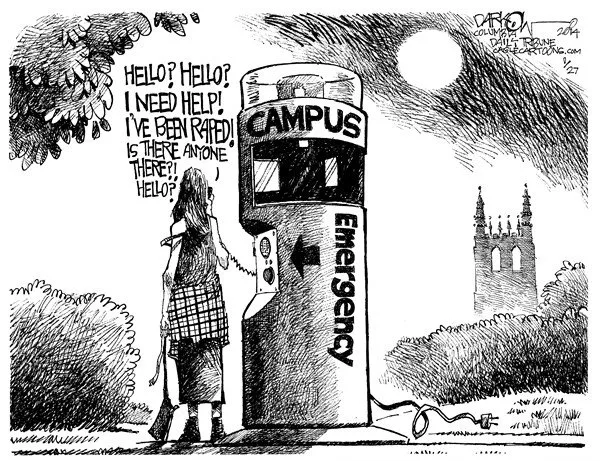
“Hello? Yes, can two girls have a ride back to Merion Gardens apartment? We’re by the business school.” Her voice is shaking, and I’m still closely watching the group, that is now staring and motioning over to us.
“Yes, I’m aware the shuttle stops over there. But it comes in a half an hour, and we feel very unsafe. Yes, unsafe, there are a bunch of–“, She removed her phone from her face and stared at it. With wide eyes, she looked up at me. “They hung up”. We decided to power through, and try to get to the shuttle stop. But once again, these men called out.
“So do you girls not wanna trick or treat? We’ve got some goodies for you.” The group erupted into laughter, while our faces went pale. My brain began to concoct the worst case scenario. There were two of us…and five of them. The fight would be nowhere near fair. We could scream and kick all we want, but their strength would overpower us soon enough. All we could do was turn a blind ear and inch closer to the shuttle stop, keeping our fingers crossed.
Suddenly, our strained prayers were answered. In front of us pulled up a maroon public safety van, and we jumped in, arguably while it was still moving.
“Merion Gardens!”, my friend and I blurted out, watching the group of men recede back into the shadows. The driver looked at us apathetically and nodded.
Safe. Or were we? The officer in the passenger seat decided to prove me wrong.
“Did you hear that call that came in about girls feeling ‘unsafe’?”, he asks the van driver. “What bullshit. If you don’t feel safe, just walk away. Girls parade around in these skimpy outfits and then wonder how they end up in these situations.”
In the back seat, I clenched my fists. How could any girl feel comfortable around this campus when this was the protecting force? He continued on his sexist diatribe. “These girls should feel ashamed of themselves.” With that single line, I felt the gnawing teeth of rape culture cut me to pieces. I’d never be fully safe on my own college campus.
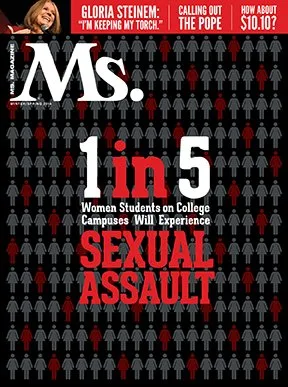
The number of rapes reported on college campuses can be categorized as an epidemic. A recent study conducted by Brown University concluded that one in five female college freshmen will experience sexual violence within their first year of school. Out of the women surveyed, about 20% reported being forcibly raped on campus while incapacitated. Do we even have to preface it with the word “forcibly”? The very act of rape is forced. No one can be willingly raped.
Forty percent of colleges haven’t investigated a single rape case in the past five years.
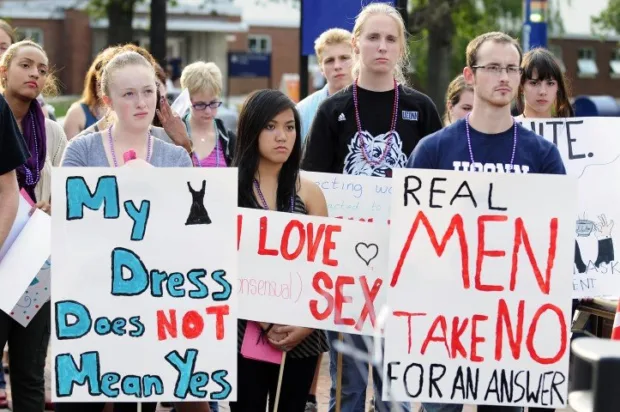
In the same vein, the phrase “consensual sex” should be deemed as oxymoronic. All sex should be consensual. If it isn’t, then it’s rape. Even if sex was agreed upon initially, even if sex was occurring, the second there is a hesitation or objection, all consent is gone, and an act of sexual assault replaces it. However, by prefacing the “type of sex”, the language suggests that women should feel some sort of shame for having sex, and that they are the cause for assault. This leads to finger pointing and derogatory phrases targeting survivors and women in general. It’s this culture that has led to nearly one in three college men admitting they might rape a woman if they knew no one would find out and they wouldn’t face any consequences.
If you think that’s shocking, a 2018 poll by Pew found that only 21% of Republican men and 39% of Republican women think that it’s a problem that men get away with rape. On the Democrat side, the numbers were better, but still left a lot of room for improvement, at 59% of men and 69% of women.
That’s why it’s no wonder that a study by the Department of Justice found that a stunning 28% of women have been a victim of either an attempted or completed forcible or incapacitated rape before college, from the age of 14 through 18. That number jumps to 37% for all women surveyed from the age of 14 through the start of their sophomore year.
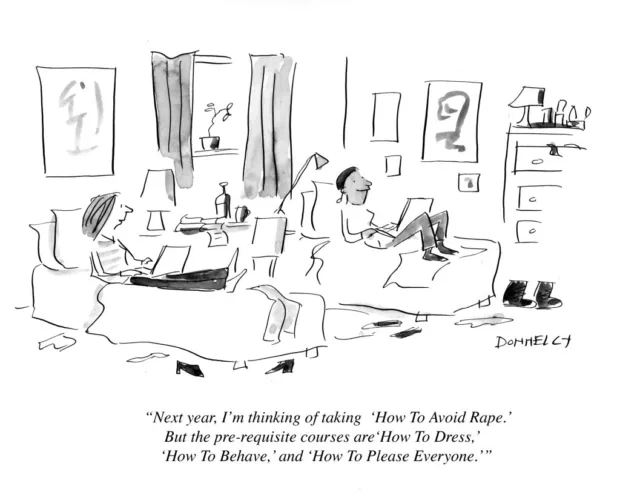
The usage of language is yet another one of the effects rape culture has had on our society. There needs to be action taken against the attackers and the abolishment of the “was she was asking for it?” question. The “boys will be boys” excuse is archaic and wrong. Boys can be boys all the want, but when those boys become rapists, there is no justification of their behavior that can be solely based on their gender. When 20% to 25% of female college freshmen report being the victim of sexual assault, we need to halt the senseless victim blaming and fix the problem at hand.
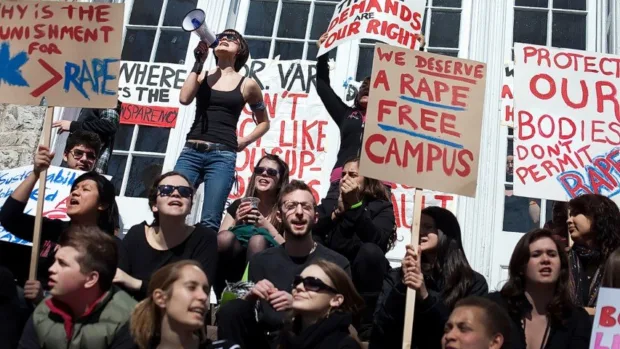
In October of 2010, the Yale fraternity Delta Kappa Epsilon paraded through a portion of campus mostly inhabited by freshman women, chanting phrases deeply rooted in rape culture. This is a world where prestigious Ivy League fraternities can chant “No means yes, yes means anal,” and only be reprimanded when there is a national outcry. Since then, the chapter has been disbanded indefinitely. But why did it take a blatant, public act of sexual harassment for the country to understand that this type of behavior is not uncommon on a college campus?
One in three college men are predators — they admit they might rape a woman if they knew they could get away with it.
Fewer than 5% of completed and attempted rapes of women in college were reported to law enforcement officials, according to a BJS/Department of Justice study. That number drops even lower for other forms of sexual assault.
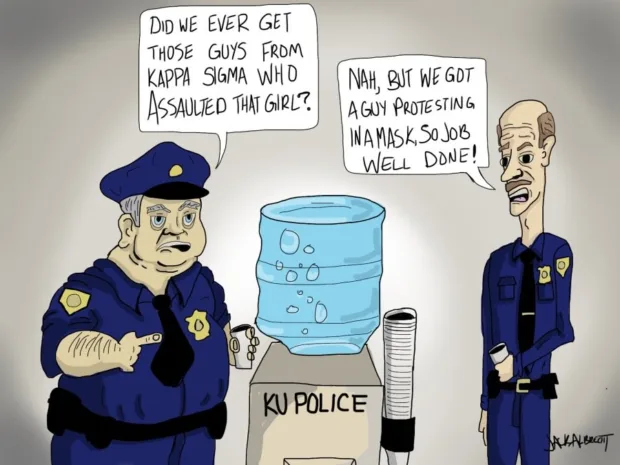
It is the very fear of being judged by their peers and faculty that keep survivors of sexual assault quiet. Much like the public safety officer I encountered, there are people out there who have no problem loudly voicing their ignorant opinions. These statements do not fall on deaf ears, however they do silence trembling mouths. Another factor weighing on women is the fact that most rape cases aren’t even investigated (in fact, 40% of colleges haven’t investigated a single rape case in the past five years), and even if the rapist is found guilty, about 90% of the time the punishment is very minimal, like simply writing a letter of apology.
The humiliation of sexual assault survivors on college campuses is a testament to the flawed priorities many institutions have. By shining a spotlight on the victims, what administrations are doing is creating a situation where she is no longer allowed to concentrate on her studies (if she was even able to, after such a traumatic experience), but instead is forced to live with almost constant distraction, shame and ridicule.
Another problem plaguing college campuses is the number of rapes committed by student athletes — and these administrations’ hustle to clean up the mess. Why does society feel the need to pretend that collegiate athletes are above such vulgar behaviors? To still cheer for a team that has sexual predators on it because “not the entire team is at fault”?
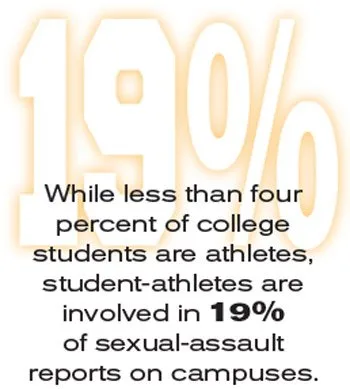
Administrations will go to great lengths to protect their biggest sources of income; the student athletes. A school that has been outed for having this problem, and mishandling it, is the University of Notre Dame. In 2010, Lizzy Seeburg (a freshman at Saint Mary’s College, across the street from Notre Dame) accused a member of the ‘Fighting Irish’ football team of sexually assaulting her. With the help of a friend, she penned this awful event in a statement that she and her friend signed and handed over to authorities. But the nightmare didn’t end there. A member of the Notre Dame football team texted Seeberg shortly after, telling her that “messing with Notre Dame football is a bad idea.”
Nine days later, after no protective action or investigation was taken by the school, Seeberg committed suicide. Even after that tragedy, it took the school nearly a week to interview the accused. The ruling was in favor of the football player, who then played in the BCS bowl game shortly after, with not even the slightest repercussions. Lizzy Seeberg was failed by her classmates, by her college, by and by society. All to protect a tradition based on patriarchal values and the “sacredness” of the game of football.
The Hunting Ground, a documentary released in the spring of 2015, sheds a blinding light on the mishandling of campus rape by universities. It tells the story survivors turned activists, taking their cases all the way to the White House and sparking reform in rape investigation and charges. The documentary also features a song written by pop star Lady Gaga, titled “Til It Happens To You”, which you can watch here (but as a warning to survivors of sexual assault, the images and situations can be upsetting and triggering):
“I didn’t know how to think about it,” Lady Gaga said in a TimesTalks panel discussion. “I didn’t know how to accept it. I didn’t know how to not blame myself or think it was my fault. It’s something that really changed my life. It changed who I was completely. It changed my body, it changed my thoughts.” The singer spoke about her years of mental and physical therapy she endured to get back to a place of feeling safe within her own body.
All students should feel like their school is a place for them to learn, grow, and discover the color of their soul. Female students shouldn’t have to looking around every corner, afraid of what they might find. This organization has created an open conversation about the aftermath of campus sexual assault, free of shame and victim blaming.
The fact that we even have to explain to a human being that they should not take advantage of another human being, be it in a drunken or sober state, is disgusting. We as a society need to change the perpetuation of these phrases and outlooks. No more of the “She had to be asking for it”. No more of the “Did you see how she was dressed? She must be embarrassed, so she’s making it up”. No more of the “He wouldn’t do that,” and the “He was drunk, he didn’t mean it”.
No more excuses and inaction. No more victim shaming. No more ignoring survivors seeking help.
No more.
If you have been sexually assaulted, please know that this is not your fault. You are not alone, and you never will be. There are resources available to you. Check out End Rape On Campus (EROC) and the Rape, Abuse, and Incest National Network. You can also call the National Sexual Abuse Hotline at 1-800-656-4673.
Know Your IX was launched by a group of campus sexual assault survivors to educate students across the United States about their rights under the Title IX of the 1972 Educational Amendment. The amendment states that all colleges and universities that receive federal funding are required to take action regarding gender based harassment and assault. Title IX is not about criminal justice, it is about the assertion of civil liberties and equal protection on college campuses.






Yeah not teaching sex ed is fueling campus rape culture to a frightening degree. With all the peer reveiwed studies coming out showing that students that haven’t had sex ed classes are likely to end up rapist I can’t believe some yahoos still don’t think sex ed should be mandatory starting in pre school. I hear in countries like Japan and Korea where sex ed isn’t big that rape on college campuses is an everyday occurrence basically.
I reay hope that doesn’t mean you are disagreeing. It has been reliably demonstrated that parents and communities can’t properly instill in young people the difference between consent and rape. I thought your post illustrated this but I hope this doesn’t mean maybe you don’t appreciate the scope of the problem??
Clearly, they need to expand their rape programs. Rape is the most frequently committed violent crime here in the United States. It even has the lowest conviction rate. I think the biggest way to stop campus rape is thru education and trust between the students and the administration. Everyone needs to join for unity and power in eliminating rape through education and prevention.
At my campus we get a lot of incoming students who are coming from schools who have abstinence only models (which means they’ve never had sex ed) and are coming in with warped understandings of consent. This needs to be a K-16 effort.
Warped understandings of consent. Well said. Adding very cheap, flat kegged beer to the equation really goos it up.
Totally agree! Can’t help but ask, what’s going on?!! What revisions are they doing in our curriculum?!!!
Exactly!!! Sex should be fun, enjoyable, and enthusiastic. If your partner isn’t into it, then check in and even stop. It’s not difficult.
“Are Colleges Encouraging Campus Rape?” NO, I don’t think so!
Then what’s wrong?! Victims are worried or afraid about speaking up, they fear of getting into trouble. I know it’s normal to be scared. But students have limited information on their resources. I honestly appreciate you sharing good starting points / organizations that can help victims of violence!
I know right!!! For the sake of prestige and keeping that good name, some universities or colleges just choose to keep quiet!!! Educational institutions should train, organize and support student activities that would address violence and discrimination!!!
I agree! Some educational institutions value their credibility MORE than helping their students speak up and get justice if they experience gender-based harm or violence. Students at all levels should be protected. I guess there’s a need to revise curriculum…
This article is an eye opener. It is really important that we educate college and high students of their legal rights to safe education, free from violence, harassment or other gender-based harms.
Students should know and be informed that violence or harassment in any form needs to be reported immediately and in complete details. I cannot just blame the campus for not taking action, sometimes important information are missing and the campus can’t just act appropriately.
This is a serious issue! As a mother, I became worried. Thanks for sharing the resources which can help victims! I’m checking “Know Your IX” and I’ll see if there’s anything I can do to help or show support to the organization!
I feel you! Sometimes it’s hard to let go of our children, it’s impossible for us not to worry about their safety. I was checking out “Rape, Abuse, and Incest National Network” and I’m glad they have counseling centers that can assist and cater to the concerns of victims (or even non-victims).
Great piece, Cristiana. Thank you for writing this amazing article on ignorance for rape! I believe the campus is only ignoring it to keep it’s “good name”. The money must be overweighing the importance of human rights.
I find this issue alarming. If gender violence is not recognized, inequality will continue to exist. Violence or harassment should end immediately for students to have equality in opportunity or education.