
In case you hadn’t heard, there’s a new breed of travelers. They’re known as the “anti-tourist”. Instead of going to beautiful places promoted for tourism, these free-spirits love to visit areas that are not only discouraged by travel advisories, but are also deemed “forbidden”. The more the media makes a fuss about the place, the more the trip becomes exciting. With no police assistance or ambulance to a local hospital, they want to encounter danger, up close and personal.

The anti-tourists find thrill primarily from the difficult and dangerous experience, rather than from being in the new environment.
Remember that invincible feeling you had when you were a teenager? When you were excited to see the gritty and more dangerous places of the world? Well, for some people that feeling doesn’t dissipate, but grows stronger over time.
A travel psychology expert named Michael Brein identifies this behavior as “macho tourism”. When danger is being reported in a particular part of the world, the anti-tourists then desire to visit that place in order to A) prove that they’re tougher than the rest of us, and/or B) get an adrenaline rush and feel more alive. Remember the time of your childhood when your mother told you not to go to a seemingly creepy place, but you went anyway? And then you came home safe and said “Look Mom, I made it”? The anti-tourists are said to be relieving that early feeling of triumph.
No big surprise, but Instagram and Facebook may have contributed to this anti-tourism behavior. When people are able to travel to the baddest badlands around the world without being harmed, they are most likely to brag about it on their social networking sites, which encourages their ‘friends’ and followers to attempt similar feats for bragging rights.
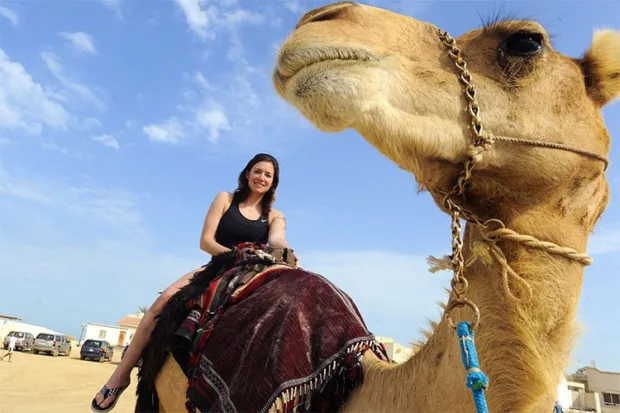
When visiting the forbidden, the anti-tourists risk being kidnapped for ransom or held captive by terrorists; they often get caught in wars and strife arising in unstable territories, get lost and killed in deadly terrains, encounter wild and deadly animals, get robbed and or murdered by opportunistic local serial thieves and killers, or become infected with exotic diseases. Sounds fun, right? (jk!) But for as long as the craving for excitement exists, the anti-tourists will continue to ignore cautionary travel alerts, and will take critical travel advisories as a “go” signal.
There are also anti-tourists who risk their lives for a “personal mission”. Maria Rychlicki, a municipal government worker in Los Angeles, spent time in Lebanon, Egypt, Israel and Columbia when these countries were on State Department alert lists. She knows she has been picking trips that are on advisory lists, but she sees this as an opportunity to represent America.
“Visiting countries on the advisory list means I am not spending money to meet other American tourists. I have often felt I am a good ambassador of the American people. I have been, at times, the first American that people (in a foreign land) have met,” she claims.
We’re not encouraging people to travel to the “forbidden” and risk being kidnapped or killed, but if you are one of the few travelers who love to go to places that other people are afraid of, then these dangerous areas are ideal for you. Enter at your own risk.
The World’s Baddest Badlands: Top 10
1. Mogadishu, Somalia
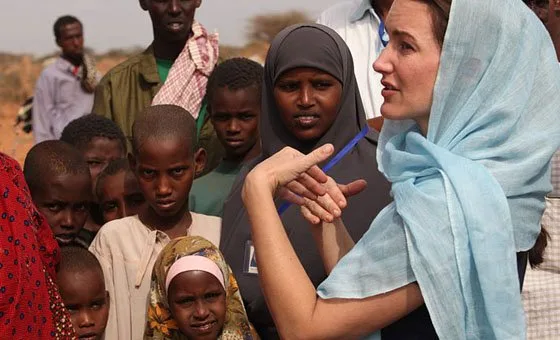
Consider a vacation in Mogadishu if you enjoy being unique. In 2004, Somalia’s minister of tourism claimed that the country hadn’t had an officially-acknowledged a tourist in 14 years. Since the start of the Somali Civil War in 1991, Mogadishu has been plagued by terrorist attacks and cross-border warring. Street crime is not uncommon, and there is no US Embassy in the city. As of August 2011, there have been a great deal of reconstruction efforts.
2. Pyongyang, North Korea
North Korea might be the spot for you if you don’t like to plan things out for yourself. All tours are controlled and escorted by the government, which is also widely known for public executions and holding entire families in political prison camps. The Economist Intelligence Unit listed North Korea as the most authoritarian country in its index in 2006. If the unending Cold War with South Korea that dictator Kim Jong-un likes to threaten will go hot sometime soon isn’t enough to turn you away, there is also a strict ban on cell phones and Internet access.
3. Sana’a, Yemen
Since the installation of a new government in 2012, things have been looking up for Yemen. However, opposition to that government, coupled with poverty and poor security, make it an extremely dangerous country. In 2013 alone there were at least 14 attacks around the country by Al-Qai’da, according to the US Bureau of Diplomatic Security. Political and civil unrest continues to rise throughout the country.
4. Bogota, Colombia
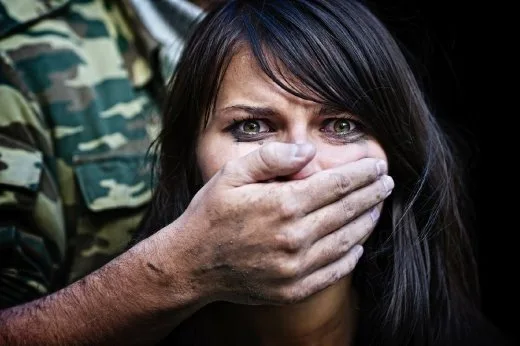
Ongoing violence among the four major Colombian drug cartels and several smaller “BACRIMS” makes Bogota a risky place to visit. Then there are the guerilla groups and paramilitary forces that you also have to avoid. Though Bogota has substantially decreased its homicide rate since the mid-90’s, drug-related crimes, kidnapping, robbery and pickpocketing are still common. In February 2014 the Colombian magazine Semana sparked new controversy after publishing the details of a massive corruption network within the Colombian army.
5. Caracas, Venezuela
At roughly one homicide every 21 minutes, Venezuela is one of the most dangerous countries in the world today. Its capital, Caracas, is witness to a murder rate of 100 per 100,000 residents. Aside from murder, the city is also famous for pickpocketing, robbery and kidnapping, all results of the poverty that plagues the country. The high-profile murder of Venezuelan celebrity Monica Spear, as well as her ex-husband, in front of their young daughter, renewed attention to the issue.
6. Grozny, Chechnya, Russia
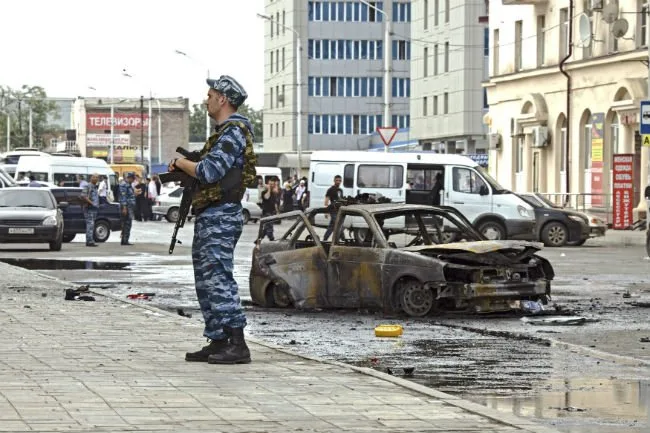
The UN has labeled Grozny the “Most Destroyed City on Earth.” The two Chechen Wars, adding up to about twelve years of nonstop violence, have left the city without much except rubble. Those who are unfortunate enough to be detained in Chechnya “face a real and immediate risk of torture,” according to Holly Carter, director of the Human Rights Watch’s Europe and Central Asia division. Recently there has been an increased interest in Grozny as an extreme tourism destination.
7. Port Moresby, Papua New Guinea
Refreshingly, amidst all this human-perpetrated crime, Papua New Guinea is the location of a great deal of seismic activity. This creates a constant threat of tsunamis, earthquakes and landslides. But, let’s not forget those standbys of rape, robbery and carjacking. Half of sexual violence in the country is committed against children, and both homosexuality and adultery are illegal. Criminal gangs, called “raskols,” make Port Moresby one of the most unlivable cities on Earth, according to the Intelligence Unit of the Economist.
8. Port-au-Prince, Haiti
The media prominence of Port-au-Prince has faded since the 2010 earthquake became old news, but the city continues to be a hotspot of kidnapping, murders, drug-related shootouts, car-jacking, armed robberies and home break-ins. Once a popular stop for cruises, the city has seen a drop in tourism that only compounds its unemployment and underemployment issues.
9. Ciudad Juarez, Mexico
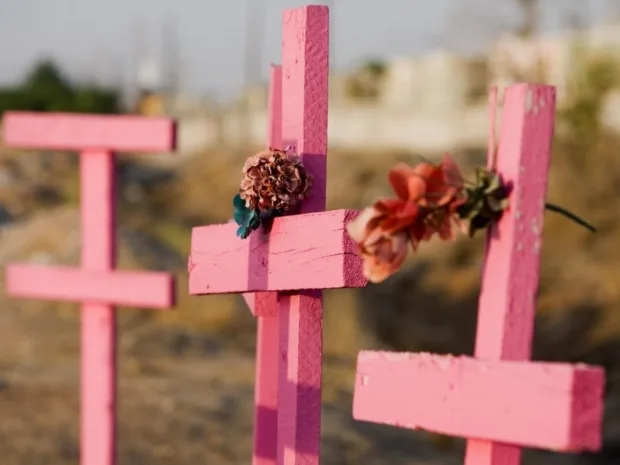
This city is noted as the “most violent zone in the world outside of declared war zones.” Drug-related crimes, kidnappings, sexual homicides; you name it, Ciudad Juarez has it. Nevertheless, it is one of the fastest-growing cities in the world. It’s probably the only place on this list where you can, in fact, purchase a Big Mac. However, those who can afford to leave the city still do so in droves, as it is one of the most prominent battlegrounds for the continuing Mexican Drug War.
10. Baghdad, Iraq
Iraq continues to be considered a “critical” place for threat of terrorism by the United States Bureau of Diplomatic Security, who reported that though the number of terrorist attacks has decreased, the deadliness of those attacks had increased due to a shift in targets towards public areas such as religious facilities and markets. Attempts to raise Baghdad to its former glory as a center of culture, especially by redeveloping Tahrir Square, are on-going.





Those anti-tourist people who would dare visit those cities are truly fearless. Checking out those risky regions and maybe using their experience for those who do not engage in such a venture is not a piece of cake. Not everyone can do it.
What I want on a vacation or travel is to enjoy new sights and meet new people. Why would I put myself in danger? That seems very illogical to me…
You forgot to include something about the pirates ‘infestation’ in Somalia. Remember Captain Phillips? Though not about tourism, it shows the grave danger that one can face the country.
Perfect spots for someone that is INSANE!!! Going there is like saying, “Hey! I don’t value my life anymore! You can kill me”, or, “Hey there, you can kidnap me!”, or something like, “Rape me, please!” These places are hellish, indeed.
They are not crazy or something, I believe, each of us has reasons. Their’s might be for curiosity and the thirst for something new.
The thing is, you might learn a thing or two when you go to these places. The information that we have about those places comes from the news only. We can understand them only when we observe things first-hand.
The News is mostly unreliable indeed and they tend to generalize. A riot in Acapulco becomes a riot in Mexico…
Excellent spot for anti-tourists! Those places are not in any way desirable or even comfortable. It can make one challenge her/his courage, wits, and will in front of unfavorable and even life-threatening situations.
I noticed that those places are also poor. Some people there might be very desperate that pushed them to resort to crimes, and their governments are somewhat unresponsive due to local strifes, making the place more dangerous for tourists.
Who would want to travel to those places? There are still unexplored places that are less dangerous. How can you risk your life for something that will give you nothing but unlimited loads of suffering?
You should have included the southern part of the Philippines (Mindanao provinces). With all the travel alerts, terrorism, insurgencies, and crime incidents, it is a highly dangerous place to go. I won’t consider going there.
I heard that an island province up north has ZERO crime.
It’s the news media that make a lump of everything to scare us from going somewhere.
Those places are not for the faint-hearted, that’s for sure. I like thrills and excitement but never in a way that I put my self into harm. I couldn’t imagine my self going on those places.