
We’ve all felt the pressure. Whether women are being told to be pure and chaste, or being cast as sexual objects in the media, the message is the same: as a woman, our only value lies in our body and what we do –or don’t do– with our body.
This is most commonly described as the virgin/whore dichotomy and can be seen in nearly any establishment or ideal that focuses on women.

In the US, we are experiencing some serious moral confusion over women’s bodies. The confusion is borne out of the intersection of hypersexualization in the media and the conservative agenda that pushes abstinence and demands decreased funding for Planned Parenthood.
Take beauty pageants, for example. Many contestants tout traditional values such as abstinence until marriage and female purity — immediately after strutting around in a bikini on stage. However, the very fiber of these pageants is, well, beauty, and outward appearance. Like any other realm that places females in a challenger role, from running for president to auditioning for a movie role, the foundation is built upon the notion that sex sells.
One telling example of this disturbing dichotomy is former Miss California Carrie Prejean, who gained favor because she promoted herself as a virgin, waiting for marriage. Americans all over the country ‘respected’ her for her purity while drooling over the breast implants that the Miss California organization subsidized for her. Then, when some racy photos of her came out, the Miss California winner lost her crown due to “breach of contract.”
This story is rife with contradictions and is a very telling example of the short-circuit we encounter when it comes to women and their sexuality. Are we supposed to be pure …or are we supposed to be sexual objects? I propose that much of this dichotomy is derived from fear of female sexuality.

Women are hidden behind burkas or victim-blamed in rape cases because the idea of self-possessed female sexuality is subconsciously threatening.
In a Jezebel interview with Jessica Valenti, author of ‘The Purity Myth: How America’s Obsession with Virginity is Hurting Young Women,’ answers a question about the intricacies of female sexuality and the complexity of the female orgasm. The supposition being that these “purists,” or people obsessed with female purity, simply do not understand female sexuality. This leads to fear, and fear leads to ignorance, anger, and sometimes violence.
A sexy woman is less terrifying if she’s only an image in a magazine; a sexual object without feeling, desire, or all the mysteries of her sexuality. But God forbid she’s a real-life woman taking ownership of her sexuality.
And the lack of information from a young age does not help. In the US, the government allocates funding for abstinence-only sex education in public high schools. With federal funding, which many schools need, and pressure from religious groups in the US, many schools choose to teach this abstinence-only sex education. Not only is abstinence-only education harmful to teens in that it paradoxically promotes more teenage pregnancies, the spread of STDs, and abortions, but it often aims its rhetoric at young girls.

In The Purity Myth, Valenti outlines some strategies used by abstinence only sex educators to push the purity agenda on teen girls. One method involves a male volunteer from the class and a piece of tape. The educator places the tape on the boy’s arm and pulls it off again. The piece of tape is presented to the class and the educator exclaims, “See how dirty the tape is? This is what happens when you have sex before marriage.” The idea being that the girl is the tape, and when she comes into contact with the opposite sex before the sanctity of marriage, she becomes “dirty.”
This and many other examples of defining a woman’s virginity as a “gift” for her future husband, only to be unwrapped on the wedding night, is the cause of misunderstanding, fear, and the perpetuation of chastity as the standard of female morality.
And this is the real issue. Women wearing itsy-bitsy bikinis or “sexy pirate” costumes on Halloween is not the issue, and these things certainly do not make women ‘sluts’. The issue is that women aren’t the ones taking ownership of their own sexuality.
Valenti talks about the overlap between the agendas of the virginity movement in America and the feminist movement. The question being that both movements are against the hypersexualization of women: “The big difference, of course, is that, with feminists, we’re choosing what kind of sexuality we’d like to put out there; with the virginity movement it’s adults (and a lot of men) deciding what appropriate sexuality is for younger women. It’s anyone and everyone except young women themselves defining young women’s sexuality.”

Shouldn’t we be deciding for ourselves what’s appropriate without the fear of slut-shaming? The thing that many people seem to forget is the will of each individual woman. What if the mostly nude woman on the cover of Vanity Fair reached her lifetime ambition by posing in front of that camera? Is that any less valuable than a woman achieving her goal of becoming a neurosurgeon? Does a woman’s sexuality really define her morality, her intelligence, or her humanity?
We don’t need to to tear down the models in the magazines, or slut-shame the women wearing mini skirts, or tell young women that they must be modest in order to set the balance of men and women at an even keel. The only way we can ever hope to overcome the prejudices against women is to completely divorce the idea of sexuality with morality. We can all start by examining our motivations. So the next time you think about calling a woman a slut for any of the myriad of pre-conditioned reasons, stop, think, and try to see this woman as more than just her body.
Read more: Is Religion Afraid of Women?


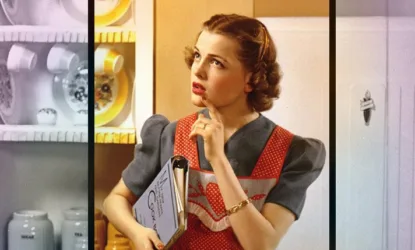



Women are often as guilty of slut-shaming as men, and in a world run ragged with sexism and male-built hierarchical constructs, the last thing a free and open society needs is women holding each other back. There are many explanations for why some women do this, but the one thing we know is that it needs to stop. Everyone, all of us. Stop.
The patriarchy is not a good thing; we may seem like a progressive society but male dominance is still rampant. Slut-shaming only serves to reinforce patriarchal views of how a woman should behave.
Slut shaming is taking us all backwards. It is of absolutely no use to anyone, quite apart from the fact that it is vicious and disgusting. We gain nothing by demonising sexuality and castigating those who enjoy sex, instead we return to the same old patriarchal standards for women that simply cannot be tolerated.
If we all stopped hating each other for things that have absolutely no effect on our lives, the world might actually turn into a nice place. We’re never going to progress as a society if we’re all so determined to keep each other’s heads below the water. And if anyone thinks that slut-shaming or any other kind of enforced inequality is okay, they’re in wrong!
Slut-shaming is indicative of a society that retains archaic and hypocritical views towards sex, and it’s time things changed.
The whole “slut-shaming” hullabaloo is mostly about “rape culture” and about guys not wanting to marry girls who’ve had a lot of sex partners. A lot of guys will label most women a slut, but men are fine with allowing a slut be a slut. Not sure how that dilemma works for them.
There is nothing I hate more than overhearing a woman speaking ill of another woman because of how she chooses to express her sexuality. Now, I’m not saying that slut-shaming is tolerable or even expected when men do it and intolerable when women do it, because the fact that slut-shaming is even a thing still baffles me.
Slut-shaming is far more harmful than simple name-calling — although being denigrated publicly in itself can be traumatic, as the suicides of a number of slut-shamed girls attests. Once a girl or woman is regarded as a “slut” she becomes a target for sexual assault. And if she is sexually assaulted, she may be assigned the “slut” identity ex post facto to rationalize the crime and to protect the assaulter. The girl who was raped at a party in Steubenville, Ohio in 2013 was vilified by strangers and peers on Twitter, Facebook, Instagram and YouTube; they could make sense of the horrible crime only by assigning the “drunken slut” label to the victim. ?
Slut-shaming is not really about women’s sexuality. It is grounded in the belief that men get to assert themselves, and women do not. It may be getting a lot of attention these days, but slut-shaming is really just a catchy way to signify old-fashioned sexism.
I don’t many people don’t understand this. I think some people refuse to admit what is true that they are willing to block out anything that interferes with their perspective. But it is true: women can be mean to other women. And I’ll take it a step further: they are as much responsible for this “mans world” than they are willing to admit.
But how many studies out there show that women do compete against one another? Dozens of studies. I admit it alienates me when they engage in this kind of talk, and don’t call out their own peers on the matter. But instead they selectively use a mans opinion to further exploit a cause that is non-existent. Yes is true that we can be too much, but is not entirely our problem. I believe jealousy plays a bigger role in it.
Social class goes far beyond calling women “sluts” or other inappropriate names. You can even see it in todays social networking of women on tv. But women do have some resilience. I give them that. But I also believe many don’t want to be looked upon any different if they say something that goes up against those within the same peers. But is highly subjective, and oftem times, those that do cry sexism are as guilty as us when we cheat. Is not rocket scientist, but yet, they make it sound too complex to understand. This issue goes beyond that social class. But this is a start.
I told my niece, who attends the University of IL, that we have much to lose because we don’t come from good economic backgrounds. And those that do have good economic backgrounds don’t. So maybe competition is a good thing. But then again, no one ever said that you won’t make enemies along the way.