
If you thought bleeding from your nether regions for a week every month was bad, imagine if you had to spend this week sleeping on the hard floor of an outdoor hut…
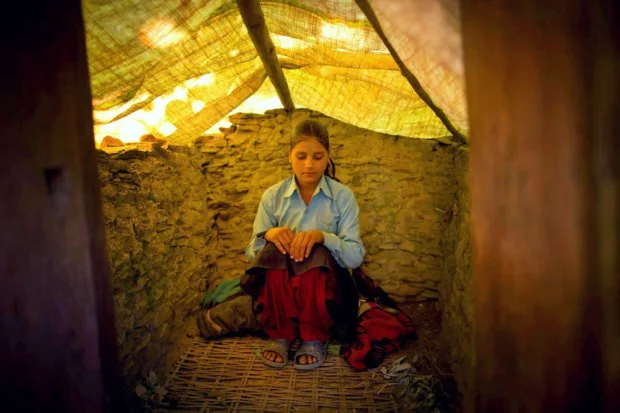
In some regions of Nepal, this is a reality. The villagers who practice this tradition, known as ‘Chaupadi’, believe that a menstruating woman will anger the Hindu gods or contaminate the home if they remain indoors when Aunt Flow comes to pay a visit. They go each night to their “menstrual huts” for fear that livestock or family members may get sick or die.
In the west Nepal village of Timalsena, 26-year-old Dambara Upadhyay was no exception. On November 18th, 2016, Upadhyay slept in a menstrual hut, and on the morning of November 19th, she was found lifeless. This is certainly not the first time that a woman has died in a menstrual hut, but it marks the first time that the prime minister requested an investigation of the incident. Almost exactly one month later, overnight on December 17th, a 15-year-old died when her hut burned down.
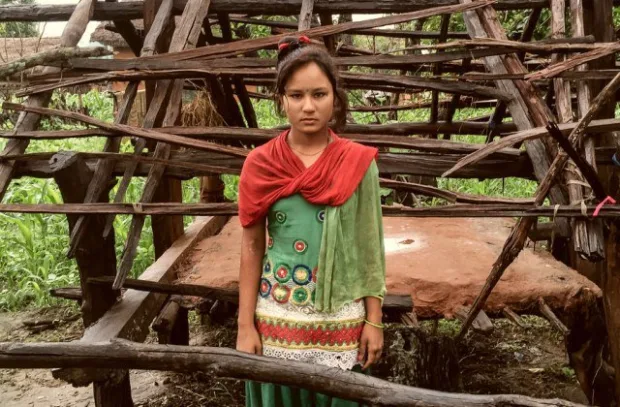
Despite the dangers, it’s not hard to see why this superstitious tradition continues. If, for generations you’ve been told that the evacuation of hemoglobin from your lady parts was connected to the death of your grandfather, you would be pretty quick to seclude yourself in an outdoor hut as well.
The practice has been outlawed since trucker hats were a thing (2005 in case you’ve wiped that tacky trend from your memory), but like many regions where modern life (and trucker hats) have yet to infect the populous, the tradition has continued. And even though Chaupadi was outlawed 11 years ago, there were no avenues put in place to prosecute violators, so the practice carried on unhindered. Following Upadhyay’s recent death, the Nepal Ministry of Women, Children, and Social Welfare has vowed to nip the issue in the bud by enacting laws designed to punish families who practice Chaupadi.
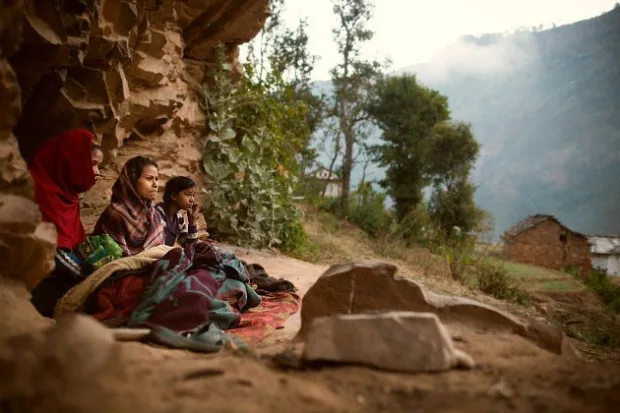
But, in the nearby district of Jumla, one man is attempting to change the practice another way. Through his organization, Surya Social Service Society, which promotes safe menstrual practices, he persuades local families to set up a secluded room inside the house for a woman to spend her time of the month, instead of a hut outside. Model families who have done this are then used to demonstrate to other still-suspicious families that grandpa will live to see another day, and that the crops and the livestock will keep producing as per usual.
To get involved in spreading awareness about menstrual health and save women’s lives, contact the Surya Social Service Society.






I know that most of us would say that we just have to educate these people about the truth or the reality. But we all know that their belief stem from their ancestors and we can’t just trample on their beliefs just because we think it’s 2018 already or that this is the new generation. We have to think of a better approach to educate them without disrespecting their traditions. Kind of like a modernization of their old beliefs? I don’t know. I’m not an expert on this.
Wow, I never thought that there would still be places like this that believe that periods are an abomination.
Now we know that most of us are just entitled b*tches who don’t appreciate that having a bed to sleep in and clean tampons to use make us really lucky.?
I’m never complaining about my state of being whenever I’m on my period. I’m just thankful that I don’t have to experience something like this. The government should do something about this, it’s insane!
Would menstruation be less offensive if Nepalese women use tampons or menstrual pads? Is the government making any attempts to educate these communities?
Why these practices persist is rooted in religion. I am surrounded by Orthodox Jews who cannot touch a menstruating woman, or even sit in a chair she has sat in. I hear of infertility due to restrictions on the number of days required after cessation of menses before intercourse is allowed. Let’s not be so indignant with Nepalese superstitions yet accept as multiculturalism the superstitions right here in Brooklyn.
I’m sad and disheartened that a beautiful country like Nepal is practicing a cruel tradition.
For me, the most heartbreaking part is that women actually believe that they are “impure” and could bring a curse on the household if they remain indoors. I’m sad that they are accepting this tradition as “normal.”
This article broke my heart ? This superstitious practice has existed for so long which leads people to believe it’s true anyways. So it has become a part of their lives. Very, very sad
It’s hard to imagine such dangerous tradition is still prevalent in some parts of the world. Menstruation is a natural part of being a “female,” why would any culture think it’s evil?
Poor girls are tormented… How do they escape from such valued cultural tradition?
THIS IS RIDICULOUS!