
I love hanging out in bed cuddling, and I require a blissful seven hours of sleep a night—minimum. Which is why I’ve been a little cranky about the less than satisfying slumber that’s plagued me over the last few weeks. I can never sleep on planes, and I rarely sleep well the first night in a new place, so when I bounce around a lot while traveling, I often end up feeling like I need a vacation at the end of it! All the excitement of traveling makes winding down for bed more difficult, not to mention the fact that I find myself waking up in the middle of the night.

But what about sleeping pills?
Pharmaceutical sleeping pills can be addictive, have serious side effects, produce poor-quality sleep, and give you morning grogginess. Melatonin pills are dangerous because they eventually mess up your body’s ability to generate melatonin without the help of a daily pill. You should avoid them both. The one type I’ve taken that works and is safe is an herbal blend called Deep Sleep. I take it when I have a big day coming up and need to be 100% sure I’ll sleep well, or when I’m traveling.
But what about an everyday solution?
Me being me, I set out to learn everything I could about sleep. What I learned is shocking. First of all, MELATONIN! This super-potent antioxidant is naturally produced by your brain based on signals from the sun. If you’re asleep between 10pm and 2am, it leads a clean-up crew in your body that gets rid of cancer cells, delays aging, and regenerates and repairs your cells? The question is — how do we get more of it??
Timing Matters
It sounds weird, because everyone is supposed to be different, but study after study shows that your body is designed to fall asleep and wake up at the same time each day — around 9:30pm and 6 or 7am. No matter your regular routine, when you stay up too late, your body misses critical deep sleep hours. Your body does its cell-regenerating, detoxifying, and healing routine between the hours of 10pm and 2am. After 2am your sleep will get much lighter and less beneficial. If you notice you’re waking up between 2 and 3am, it may be because you’re not getting to bed early enough for your body to initiate this renewal deep-sleep process.
Timing your sleep is like timing an investment in the stock market – it doesn’t matter how much you invest, it matters when you invest.
The science is clear: you have an internal clock lodged deep within the brain that regulates your sleep – the pineal gland. It receives information about the sun through your eyes via the optic nerve. As the sun sets, the pineal gland is able to sense the change in light transmitted through your eyes and it begins to secrete melatonin to prepare your body for sleep.
If you are still awake, the “second wind” phenomenon occurs at 10pm, and this process of free radical removal becomes significantly impaired, which causes aging, disease, and is extremely harmful to your health. If you’re currently falling asleep well past 10pm, make it a goal to sleep earlier by 15-30 minutes each week until you hit the 10pm goal. This should help:
10 Minutes a Day
Watch the sunset and sunrise daily. Even if you are able to only take a 10-minute walk as the sun is setting, this is a very powerful way to enhance melatonin secretion. Once you are waking up earlier, also watch the first 10 minutes of the sunrise. If you do this, your brain will initiate a chain of biochemical reactions to support your natural daily cycles. Not sure of the timing? Just google sunset and sunrise times.
An easy way to prevent jet lag is to watch the sunset and sunrise for the first 24-48 hours in your new destination.
Drink This Not That
Cherry juice increases the level of melatonin secreted at night and promotes sleep cycles. By drinking only a tenth of an ounce of pure cherry juice, volunteers in that study noticed that their time asleep increased by 25 minutes after one week.
For those of you who thought that a glass of alcohol would help you sleep, think again. Studies show that alcohol messed with the chemicals in your brain and lightens your sleep, reducing both REM and deep sleep. On other words, the quality of your sleep will be poor, and you’re likely to wake up a lot. If you drink a lot, it can trigger sleep apnea, where your brain fails to tell your lungs to breathe! I know this one’s tough, but try not to drink too much before bed.

I assume it goes without saying that caffeine is not your friend. Even drinking coffee in the morning eventually changes your brain chemistry (hence, withdrawal symptoms) and messes with your body’s rhythms. Drink relaxing organic caffeine-free herbal teas instead, like chamomile. Definitely don’t have any caffeine after 4pm, as its effects last up to 6 hours and can make it hard to get restful sleep.
And speaking of food and its effects on sleep, it’s very important to avoid heavy meals before bedtime, since they can lead to indigestion and acid reflux, and they keep your body busy while it’s supposed to be busy regenerating overnight. Instead, make lunch your big meal, and have something light and plant-based for dinner.
Unplug
Monitors give off blue light that keeps your brain from producing melatonin — the potent antioxidant that helps you to sleep. Throughout the day, we’re constantly overstimulated by our computers, social networks, cell phones and TVs. That’s exactly why it’s important to clear out all electronics from your bedroom. At first, I thought having a TV in my bedroom would be relaxing (I love watching my shows with my hubby), but the opposite turned out to be true. Instead of being tired and ready for bed for bed, I ended up feeling more awake and stimulated.
Since bedrooms should really only be a place for sleeping, I decided to make it my own personal gadget-free oasis. I moved my TV, phone and laptop into the office, so I wouldn’t be tempted to watch TV or check my email before bed. I also decided to follow a tech curfew, giving myself an hour before bed that I use to unwind without electronics. Instead, I used that time to relax, take a bath, read, and write in my gratitude journal.
If you really can’t rip yourself away from your screens, make sure to find the night mode setting on your device that removes the blue light in the evenings (here it is for Windows, Android, iPhone, and Mac) or getting blue light filtering glasses if you’re watching TV.
Are You Afraid of the Dark?
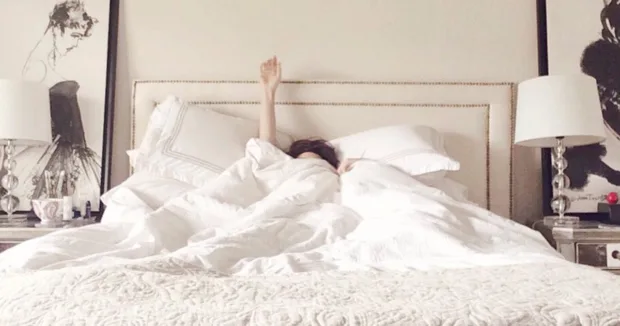
Because you shouldn’t be. In fact, you should embrace it. My second step in creating a peaceful sanctuary was to ensure that my room was pitch black. Light actually tells your brain, “Hey, you should probably be awake!” The darker your room, the better your sleep.
Most hotel rooms have blackout curtains, but if your bedroom at home doesn’t it’s a good idea to invest in some heavy curtains to block out external street light. Even the glow of your iPad, smartphone and other electronics can keep you up, but that shouldn’t be a problem if you’ve already eliminated them from your room.
As a backup, I always keep an eye mask on-hand. They’re great at home, when traveling, on airplanes, etc.
Be Cool
The ideal temperature varies for each person, but typically, cooler temperatures help you sleep better. For a good night’s sleep, set your Nest to between 65 and 72 degrees Fahrenheit.
When my hubby and I first moved into our new place, we set the thermostat to my standard 75 degrees for bedtime. But I found myself waking up in the middle of the night feeling stuffy and warm. After toying with the vents to make sure I was getting enough airflow in my room and getting fan to circulate the air, I found our ideal zone. There is no gold standard, so play around with different temps and find what works best for you.

Scent-sational Sleep
I love fresh flowers. I’ll admit, I tend to go all out, putting fresh flowers in the living room, kitchen, dining room, and most recently, the bedroom. Who doesn’t love bringing a little life indoors? I’ve found that placing a bouquet of fragrant flowers on my nightstand puts me in a better mood before bedtime. Plus, I love being greeted with a bright, cheery bouquet when I open my eyes in the morning. Talk about starting your day right! (Just make sure the blooms are kitty-safe, as some flowers are poisonous to pets.)
Speaking of flowers, lavender and chamomile have both been shown to promote a better night’s sleep. In fact, studies have shown that those who sniffed lavender or chamomile before bed slept deeper and felt more vigorous in the morning. They also decrease heart rate and blood pressure, helping you feel more relaxed. In addition to beautifying your room, a vase of fresh lavender (which is safe for your pets, too) or an essential oil diffuser with lavender and chamomile essential oil will put you in the right mood for bedtime.
Drown it All Out
Do you hear sirens, or people talking throughout the night? It’s important to have as silent of a room as possible while sleeping, so invest in double-pane windows in your bedroom. If you’re in a rental and can’t upgrade the windows, or you can hear your neighbors, try a fan to at least keep the noise white and consistent.
And remember how I said I didn’t let electronics in my bedroom? Or that it should be silent at night? Well, here’s the one exception: my spa sound machine (which has recently been replaced with an Amazon Echo playing Spotify playlists). It might sound a little hokey, but I love it. The soothing sounds of rain, the gentle crash of the ocean or even white noise gently lulls me into a blissful state of peace. Find one that runs on a timer, so you never have to worry about turning it off manually.
Check Your Bedding
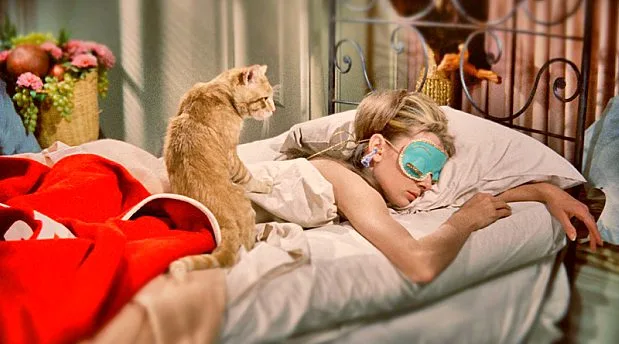
Maybe it’s me, but changing out my bedding is something that’s rarely on my to-do list. But if you have a feather pillow or duvet, it’s worth doing. Feathers are food for dust mites and cause allergies that are often so subtle you don’t notice them, but they keep you up anyway. On top of it, they clump, poke and tickle. Not good!
So when we got a down feather duvet as a wedding gift, we promptly returned it and opted for kapok and allergy-free (as well as cruelty-free) alternatives instead. I decided to invest in some high-quality chemical-free Kapok pillows. And let me tell you, they did not disappoint. After checking the labels, comparing brands and finding the right pillow for my sleep position, instead of the standard $20 cheapies I was using, I found the perfect organic pillows. My head actually feels like it’s floating on clouds.
Get Your Body Ready
Yoga and meditation have been proven to promote restful and regenerative sleep. Get into a routine where you practice both every day. It’s worth the effort!
Whether you try just a few of these tips or all ten, each one helped create my perfect sanctuary of slumber. Hey, a girl needs her beauty rest, right?






Brilliant piece. Thank you so much for the tips! I’ve recently read that blue light can also affect one’s sleep. Does anyone have information or personal experience with the effects of blue light?
I think I may go out and purchase an eye sheild. with small children who end up in my bed and need a nightlight to sleep at night it is hard to control light. But, I need to be rested to care for them!
Great post as always. 🙂 Wish there were a list of foods that will actually promote sleep; I’ll try “a handful of walnuts before going to bed”, “a high protein snack several hours before bed”, and “a piece of fruit several hours before bed”
This is great information! There are some out of the box ideas here, such a cherry juice. I will be trying especially that one tonight! And if it doesn’t work, I have 7 other options here to go. ? Thanks!
My problem is that I can’t fall asleep unless my brain is dead tired. Like when I’m reading a great book, even when my vision starts to blur, I will stay up and read until my eyelids are too heavy to keep open. At that point, I go to bed. It’s horrible, but when I try to go to bed earlier, I just end up laying there for 3 hours stubbornly “trying to sleep.” Lol. I will try exercising more regularly though. That might tire me out enough.
First of all, I love sleeping, and I do not like a lousy night’s sleep, for whatever reason. In this article I was hoping to find maybe one at most 2 tips for a better night’s sleep. Instead there are more 8 great suggestions. 🙂
Can’t thank you enough!
Amazing piece yet again, Hilary! I love your in-depth analysis’ of issues and the way you provide solutions. You are such an asset worldwide to everyone’s health and lifestyle. Thank you so much.
I am a bit skeptical about complete darkness for sleep. I live in a northern latitude, around the 57th parallel. In the middle of the summer it never actually gets dark, only darker than day–sun down at 11:30 and up at 3:00 with 3 or 4 hours of twilight. December and January it is just the opposite, with very short days. If we slept during dark, and were awake during light we would be in a fine mess! I sleep just fine in the light, and dark does not make me sleepy. So much for the meletonin story. A person cannot live and sleep by the sun except maybe those between 0 and 30 degrees lat. I believe our circadian clocks are set as children and that’s why we sleep like we do. My “clock” was messed up as a child, and I sleep terribly. I have finally accepted this after trying everything in the book to sleep normal. I do sleep normal–normal for ME.
What a bunch of interesting conditions and solutions we have out there! My doctor told me that most likely I would never sleep normally, although you can’t say I haven’t tried nearly every trick in the book.
Very helpful & informative. Thank you. I’m going to try some of these. I’ve been having trouble falling asleep since the beginning of the summer