
We all know names like Thomas Edison and Alexander Graham Bell, but what about all the women inventors whose creations we use every day? Women invented windshield wipers, the first computer program, life rafts, the paper bag, Kevlar, fire escapes and, mind you, chocolate chip cookies. If good ideas had only come from people who looked like the founding fathers, then a wealth of advances and joys might have been delayed or missed entirely.
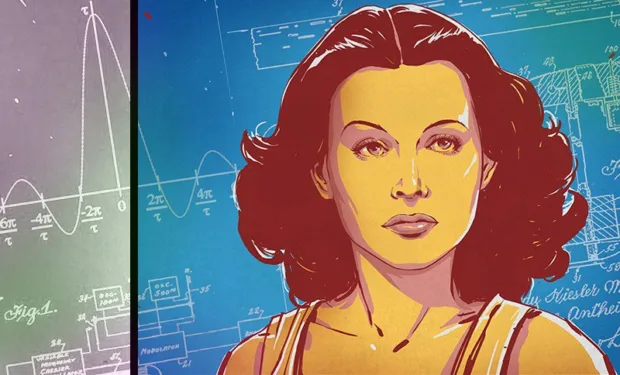
The following women, whose inventions changed the world, rarely got credit. The sad truth is that we live in a world where men are respected for their accomplishments and women are routinely taken advantage of. In fact, in most cases men they knew stole their credit and fame. That’s why it’s all the more important that we share this article and give these amazing, yet underappreciated, women the credit they’re due.
Hedy Lamarr
Hedy Lamarr, once dubbed “the most beautiful woman in the world”, was a lonely movie star who fled Austria to the US during the war. She was so lonely, in fact, that she spent her evenings alone, surrounded by engineering books, inventing everything from a better tissue box to a new traffic signal.
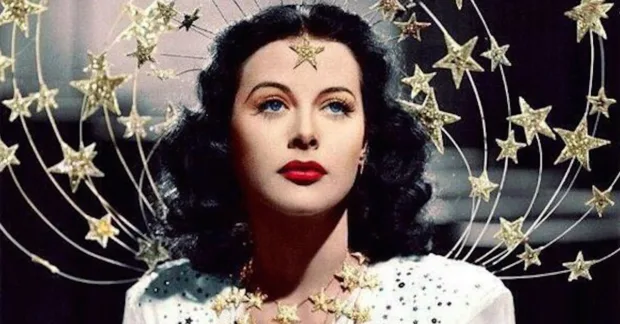
But it was her system of frequency hopping that she invented during World War II to assist the US Navy, that is still used today in wireless communications technology like Bluetooth, GPS, and Wi-Fi.
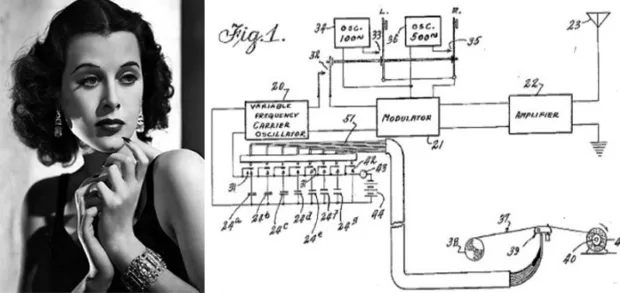
Her frequency hopping system helped win America the war, but when she first approached the US Government with her ideas, she was scoffed at and told to stop her ‘silly inventing’ and instead use her beauty to raise money for the war. She signed over her patent to the government for no money at all. Right after she did so, others took her ideas and ran with them, taking full credit.
It took 50 years for her to finally get the credit she deserved, and yet all her obituaries talked about was her beauty, with only a passing mention of her invention.
Elizabeth Magie
Unlike most women of her era, Elizabeth Magie supported herself and didn’t marry until she was 44. She worked various jobs and spent her leisure time performing standup comedy and creating a board game that was an expression of her strongly held political beliefs.
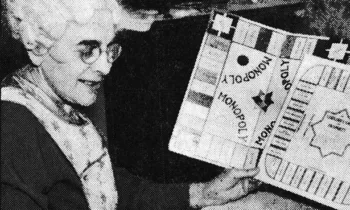
She was in her 30s when she applied for a patent for her game in 1903, after years of developing and revising the game. She represented the less than 1 percent of all patent applicants at the time who were women. (Elizabeth also dabbled in engineering; in her 20s, she invented a gadget that allowed paper to pass through typewriter rollers with more ease.)
In 1904 she started producing her board game, which she called Landlords as a criticism of capitalism and land monopolism. She had created two sets of rules for her game: an anti-monopolist set in which all were rewarded when wealth was created, and a monopolist set in which the goal was to create monopolies and crush opponents. Her dualistic approach was a teaching tool meant to demonstrate that the first set of rules was morally superior.

In an ironic twist, Charles Darrow stole the idea from her and sold it to Parker Brothers as Monopoly. He got all the credit, but now we know that all those game-night family feuds were really thanks to Elizabeth Magie. The completely fabricated tale, repeated for decades and tucked into the game’s box, was that an unemployed man named Charles Darrow invented the game in the 1930s. He sold it and became a millionaire, his inventiveness saving him — and Parker Brothers, the beloved New England board game maker — from the brink of destruction. It’s a great ‘American Dream’ story — except it isn’t true.
As they realized that the game would be a success, Parker Brothers convinced Elizabeth to accept $500 for the patent for The Landlord Game and two other games she created, with no royalties. She had no idea that other game inventors had gotten paid much, much more for their inventions, or that Parker Brothers would do their best to erase her name from history.
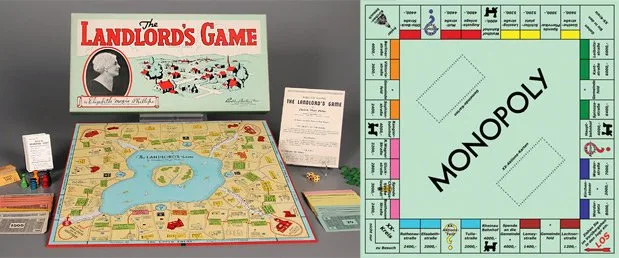
The New York Times reported that, in a series of 1936 interviews, she expressed anger at Darrow’s appropriation of her idea. Then elderly, her gray hair tied back in a bun, she hoisted her own game boards before a photographer’s lens to prove that she was the game’s true creator. “Probably, if one counts lawyer’s, printer’s and Patent Office fees used up in developing it,” The Evening Star said, “the game has cost her more than she made from it.”
In 1948, Elizabeth Magie died alone, in relative obscurity and relatively poor. Neither her headstone nor her obituary mentions her role in the creation of Monopoly.
Lillian Gilbreth
Lillian Gilbreth is known for many things, but perhaps most of all as one of the first women to “have it all” – a career as well as twelve children. It’s Lillian Gilbreth you have to thank for inventions such as the foot-pedal trash can and refrigerator door shelves. Also known as the mother from Cheaper by the Dozen, we’re guessing her 12 kids had something to do with her desire to make everything efficient.
She and her husband wrote several books together (we’re guessing she did most of the writing), however, Lillian was never named co-author because the publishers were concerned about the credibility of the books should it be known that a woman was one of the authors – despite the fact that Lillian had a doctorate and Frank had not attended university.
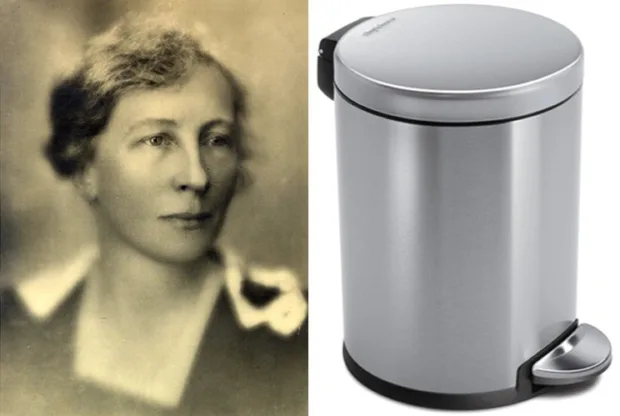
When her husband died suddenly of a heart attack at age 56, she became a single mother. Her attempt to forge on with the couple’s consulting business was put in jeopardy, as some companies refused to do business with a woman. Not one to be discouraged, she forged on and became quite successful.
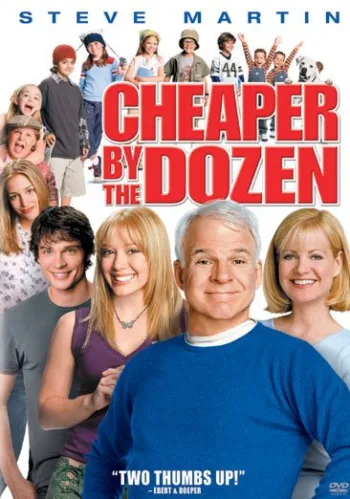
Lillian is not only an inventor, but also a psychologist, management consultant, known as the ‘Mother of Modern Management’, and became the first female professor at Purdue’s engineering school. During her lifetime, this brilliant woman received many awards and honors, including twenty honorary degrees. She was the first female member of the Society of Industrial Engineers, a Fellow of the American Psychological Association, the first woman to receive the Hoover Medal for distinguished public service by an engineer, and was the first female psychologist to have a United States postage stamp issued in her honor.
Margaret Knight
Love shopping? Well then you should know that you have Margaret Knight to thank for all those shopping bags. Paper bags used to be shaped like envelopes. That is, until Margaret Knight decided that she’d like a bag with a flat bottom and redesigned them. When she realized that folding bags this way by hand was difficult, she proceeded to invent the very first machine to make paper bags.
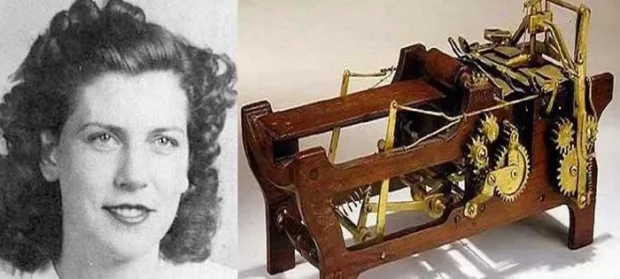
After she created the machine and the bags, she gave a demonstration to a friend and fellow machinist named Charles Anan. He promptly stole her ideas and plans, and filed a patent, pretending to be the inventor. She found out when she tried to file her own patent and was rejected. She sued him and won (her years of notes helped), going on to found the first paper bag making company.

Margaret, “at the age of seventy, is working twenty hours a day on her 89th invention,” reported the New York Times on October, 19, 1913. How inspiring!
Rosalind Franklin
If you paid attention in your high school biology class, you probably remember the names Watson and Crick. They’re the ones who won the 1962 Nobel Prize in Medicine for modeling the structure of the DNA molecule, and explaining how the shape lends itself to replication. The thing is, they stole the credit from a woman named Rosalind Franklin.
These men were co-workers of hers who disliked her. They thought that women should be assistants, not scientists. In those times, women weren’t allowed in the cafeteria and were forced to leave the building during lunch (so that men could have their guy-time, I assume), and during that time Watson and Crick stole Rosalind’s notes and then took credit for her discoveries.
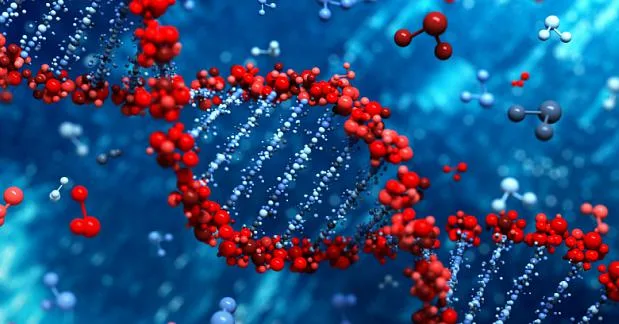
Disheartened, she signed away her rights to continue working on DNA so that she could to get out of her work contract and move to another city, putting this betrayal behind her. By the time “The Double Helix” was written, Franklin was portrayed almost as a villain in the book. Watson describes her as a “belligerent, emotional woman unable to interpret her own data.”
Although she went on to make important discoveries about viruses that laid the foundation of modern virology, it is only in the past decade that Franklin’s contribution has been acknowledged and honored. While you may not have used her discoveries directly, you have this discovery to thank for many life-improving (and crime-solving) advancements. Today, there are many new facilities, scholarships and research grants –especially those for women– named in her honor.
And here are twelve more women who also deserve to be recognized, and in many cases were:
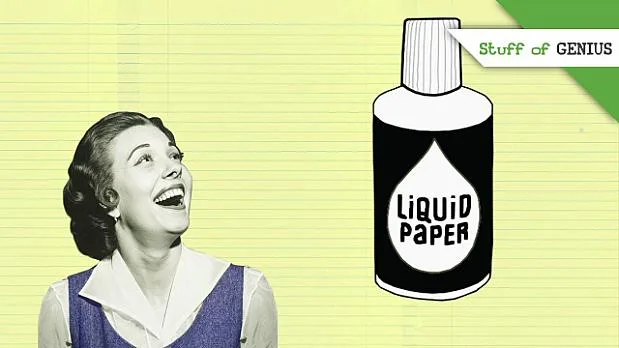
Bette Nesmith Graham: Bette proved herself to be a better inventor than typist when she got sick of re-typing pages and created liquid paper to cover up her errors. She started selling it in 1956 and sold her company to Gillette Corporation in 1979 for $47.5 million dollars. We’re just glad someone on this list got some recognition for their brilliance.
Melitta Bentz: Scooping coffee sludge out of the bottom of your mug is the worst, and thanks to Melitta and her invention of the paper coffee filter, you never have to. In this finals week, my classmates and I have nothing but gratitude for the woman who made our coffee addiction possible
Maria Beasley: In the late 1800s, Maria decided that someone should probably do something about all the people dying at sea, so she invented the life raft. Now if only the people on the Titanic had listened…
Mary Jacob: Between the tight shape and whalebone material, early bras were basically designed by Satan. Mary decided that it would probably help if bras were, y’know, actually shaped to fit women’s anatomy. So, she invented the far comfier modern bra and sold the patent to Warners for a small sum.
Sarah Goode: Goode was the first African-American woman to get a US patent in 1885 for her foldaway bed. She didn’t stop at practicality, though — Goode made sure all the beds were pretty, too.
Stephanie Kwolek: If you’re a super secret agent who’s survived getting shot, you have Stephanie to thank. She invented Kevlar, the material used in bulletproof vests. If not, you can thank her for cables, tires, and the knowledge that, should you ever switch careers, she’s got your back.
Virginia Apgar: The Apgar Test used to check a baby’s Appearance, Pulse, Grimace, Activity, and Respiration after birth is thanks to Virginia. She must’ve learned from all the other women inventors who watched a man take credit for their inventions, because she put her name all over it.
Katharine Blogdett: Katharine invented the non-reflective glass used in stuff like camera lenses, telescopes, and eyeglasses. It’s her you have to thank for that picture your friend took at an angle that makes you look like you have ten chins. Thanks, Katharine!
Women of Ancient Mesopotamia: Ah, beer. The classic sidekick of any douchey frat boy, it’s always there to throw a misogynistic ad at us. But once upon a time, beer was actually the women’s domain. Mesopotamian women are credited for the creation of beer, and most ancient civilizations thanked a goddess rather than a god for their beverage.
Mary Anderson: When Mary invented the windshield wipers in 1903, everyone thought it would be too much of a distraction for the drivers. By 1916, everyone figured out that not being able to see is a tad more distracting, and her invention became a standard fixture.
Ruth Wakefield: In the best accident of all time, Ruth ran out of baking chocolate. She used chunks of chocolate instead, hoping they would melt. Instead, we got the chocolate chip cookie, proving that procrastinating on the grocery shopping can have some positive side effects after all.
Josephine Cochrane: After Josephine noticed that her servants chipped her dishes, she started washing them herself. When that got old, she invented the dishwashing machine to do it for her. If that’s not the best reaction to any annoying chore ever, we don’t know what is.
And for all the women who still haven’t gotten the credit they deserve – we salute you, and we promise to honor you by continuing the feminist movement to ensure that women are marginalized less and less as years pass.






This makes me so angry!!! ?
Amazing read!! Interesting touch of history with modern issues.
Most of the women’s inventions benefit men in so many ways. They could’ve been thankful instead.
They could have at least taken half the credit not the full?!
Awesome post! We all need a reality slap. ?
I thought men were smart too, but running off with someone else’s invention isn’t such a smart move.
I can’t believe people can talk about women and their beauty but realize it too late that they’ve done tons of amazing stuff.
Wi-Fi was the best invention ever. Thank you Hedy Lamar.
Women are more than just beauty.
Wow, I didn’t know women invented those.