
It’s not exactly news that sex is all over our TV shows, ads, books, and movies; but that doesn’t have to be a problem. What is problematic is portraying an abusive relationship as the romantic ideal, or to show the “assault them until they love you” method (ie. rape and assault) and say that’s consensual sex.

When the 50 Shades of Grey trailer came out, most of my friends sent me the link with reactions that ranged from amused to disgusted. Watching the relationship in the trailer left me uncomfortable, so I checked out the book to pinpoint the source of my unease. Thankfully, I didn’t need to read far to find it: hiding behind this ‘love story’ and ‘inner goddesses’ and other such ridiculousness is an abusive relationship.
There are hundreds of prominent examples, from Star Wars to pretty much every James Bond movie made, to Game of Thrones.
In the Oathkeeper episode of Game of Thrones, Jaime rapes his twin sister/ lover Cersei, a sharp change from the consensual sex portrayed in the book. (Here’s the clip, in case you missed it.) Disturbing relationship dynamics aside, it was a troubling scene. It became even more troubling when the director and writers of the show insisted it depicted consensual sex.
The camera cuts away with Cersei still protesting, “No, stop, it’s not right!” It’s odd that writers would be confused about the definition of such a simple word, but in the English language, “no” denotes the opposite of consent. No consent is rape. And yet the influential men who bring us these ‘love stories’, like David Benioff, D. B. Weiss, and Alex Graves continue to argue about what shouldn’t be arguable, blurring society’s already foggy definition of rape even more.
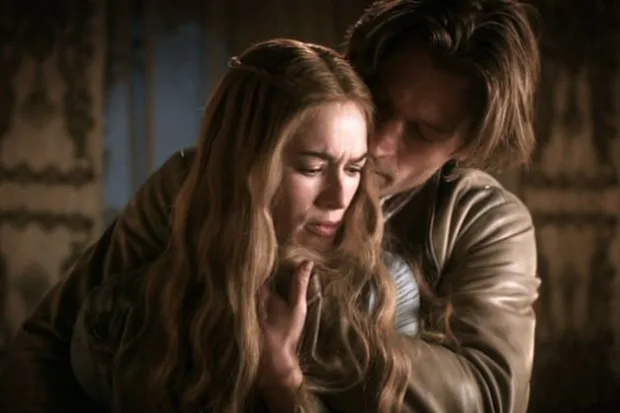
How have we been tricked into thinking that abuse is a romantic ideal?
50 Shades of Grey did the same thing to abusive relationships. It took a terrible issue faced by too many women in modern society and masked it under an idealized romance that denies the presence of a problem. I’m not talking about the violent sex, though. I’m talking about the clear patterns of emotional abuse that run throughout the story.
Anastasia is frightened of Christian in a way that is never normal or healthy for a relationship. She modifies her actions to avoid making him angry, a behavior typical of someone trapped in an abusive relationship. And the abuse in Christian’s behavior is quite clear: he stalks her, isolates her, and intimidates her. He tracks her whereabouts and restricts how she socializes. But instead of addressing these issues and condemning the abuse, 50 Shades holds up their relationship as an enviable ideal.
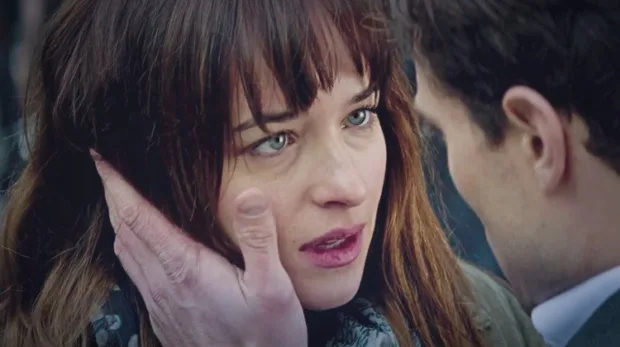

Here are a few symptoms of abuse in its various forms (note: this is a very brief list and doesn’t include all signs):
- Apathetic to your feelings / withholding care or attention as punishment
- Constantly betrays your boundaries, like sharing your secrets with others
- They make you feel guilty about wanting to see loved ones
- Thinks you are incapable of most things / they know what is best for you
- They accuse you of untrue things and try to force you into admitting to them
- Embarrasses you on purpose / demeans you in front of other people
- Tries to control you / everything you do, and is eager to point out your flaws
- Hitting / biting / slapping / unwanted physical contact
- Unwanted sexual contact / rape
- Threats of bodily harm or general threats to your person
- Manipulation / making things feel like they are all your fault
All of this sounds like something we’d want to obviously avoid. Yet, these things crop up in tons of media forms — and it’s having a real effect on us. A study showed that women who have read at least one of the 50 Shades trilogy were more likely to get into an emotionally abusive relationship. If that’s not proof that the media impacts our understanding of these issues, I don’t know what is.
What’s worse is that we, as women, are getting manipulated by what we see and read. Women are internalizing these patriarchal ‘ideals’ and this distorted perception of what is ‘sexy’, and self-objectifying. If you get turned on mostly by knowing that you’re turning a man on, instead of the man turning you on, or you focus on the man’s pleasure and arousal more than your own, or you strongly prefer to be dominated rather than loved during sex, then you’ve been affected by this.
A recent US governmental study by the library of medicine explains that self-objectification is “the process whereby individuals who are subjected to such objectification come to internalize the perspective of the outsider. Because objectification is often a gendered process (with women subject to the male gaze), self-objectification occurs more often in women than in men.
Women are internalizing these patriarchal ‘ideals’ and this distorted perception of what is ‘sexy’.
When self-objectification occurs, an individual focuses attention on how her body appears to others rather than on how her body feels and on how she can, using that body, perform actions in the world. The theory predicts several consequences of self-objectification, including body shame, anxiety, eating disorders, depression, and sexual dysfunction.”
Porn doesn’t help the situation (more about that here).
Our shows, books, and movies perpetuate the ridiculous idea that a woman shouting ‘NO!’ isn’t rape and a girl afraid of her partner isn’t abuse. It’s wrong. More than that, it’s dangerous. Sure, it’s just fiction, but the awful link our media draws between love, sex, and violence spills into real life. That means fewer women feeling able to report their assault, less support for survivors, more victim-blaming, and a less educated society. How can we tackle these issues if we don’t acknowledge rape and abuse when we see it?
If you’re still not convinced, check out this article from the male perspective, with tons of examples from popular movies and TV.
Find a way to play your part in this conversation, because the repercussions are simply too awful for the conversation to be limited any longer. Take action, even if it’s something as small as seeing The Last Five Years on Valentine’s Day instead of 50 Shades of Grey. Given the studies showing it increases your chances of being in an abusive relationship, it’s for the best.



This article is like the counterpart of your porn addiction article. It has very similar features and it has a lot of negative effects on people as well. A lot of people don’t see it as harmful because, well, it’s supposed to be just a movie, a TV show, or something. It should only be for recreational purposes but there are subconscious effects that we don’t even realize it.
It’s not just women who get affected by these things. Men would start to think it’s normal to abuse women because of how it’s portrayed in a lot of things that we watch.
A lot of people no longer recognize real romance and love from abuse. It’s because it’s what they see in TV, movies, and media overall. Our perception of relationships and love had become blurry. We sometimes think that when you’re in pain because of your relationship, then that’s love. We keep thinking that romance and love isn’t easy, that it always has to be difficult and full of hardships in order to consider something as the “right love”. When did love ever become abusive? When was it ever fun to be treated like shit in a relationship?
I agree with you. We lost the real definition of relationships already because we see the opposite of the real thing on TV!!
The list of abuse red flags remind me a lot of Chuck Bass from Gossip Girl. ?
I never liked 50 Shades. It’s a horrible interpretation of the BDSM community. It’s a stupid fantasy of an author who wanted to shed false light to a group of people who had nothing to do with actual abuse.?
As a woman who has experienced abuse before, I always watch out for red flags. However, it affects me whenever I watch series/movies/etc that has abuse in it. It’s very trigerring and I don’t enjoy it at all. However, I want to think of it like an eye-opener for those who misinterpret abuse. That there are shows that are so brutally honest and triggering but it can show the reality on what women are subjected to. I’m just hoping that media will be used as an eye-opener, not a tool for tolerating abuse and making it look romantic.
Exactly. It should be used for informational purposes, not to deceive people.
Even that lame movie Twilight had issues about glorifying abuse. Edward Cullen was an abusive glowy vampire that manipulates Bella into making her own decisions. These kinds of movies and novels are very rampant. It makes me so angry.
People need to recognize abuse between romance. This is the main reason why we can’t even fix our views in rape because a lot of people don’t see it as damaging. They think it’s just a matter of whose fault it is, without knowing what the victim went through physically and emotionally. People can be insensitive of these matters because they think being raped is just like 50 Shades of Grey. When in fact it’s such a horrible experience that can cause you a lifetime of trauma.
A lot of people have problems about the term “consensual”. For some reason they perceive having a relationship already equals to consensual sex because it involves two people that are supposed to be in love. But that’s not always the case. Even within relationships, this can be an issue as well.
We accept the love we think we deserve. I used to believe that saying and upon seeing the face of Anastacia in this blog I start to wonder, does she deserve to be treated that way? Hmmm..