
It’s not exactly news that sex is all over our TV shows, ads, books, and movies; but that doesn’t have to be a problem. What is problematic is portraying an abusive relationship as the romantic ideal, or to show the “assault them until they love you” method (ie. rape and assault) and say that’s consensual sex.

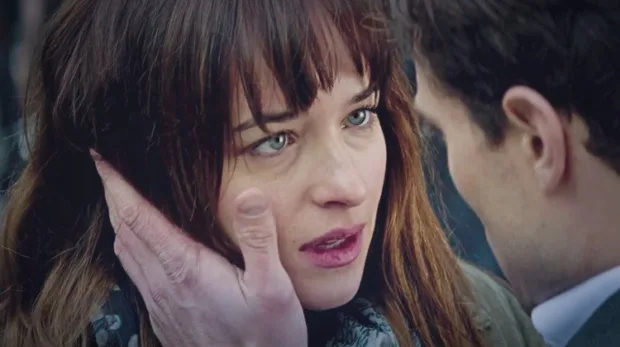
When the 50 Shades of Grey trailer came out, most of my friends sent me the link with reactions that ranged from amused to disgusted. Watching the relationship in the trailer left me uncomfortable, so I checked out the book to pinpoint the source of my unease. Thankfully, I didn’t need to read far to find it: hiding behind this ‘love story’ and ‘inner goddesses’ and other such ridiculousness is an abusive relationship.
There are hundreds of prominent examples, from Star Wars to pretty much every James Bond movie made, to Game of Thrones.
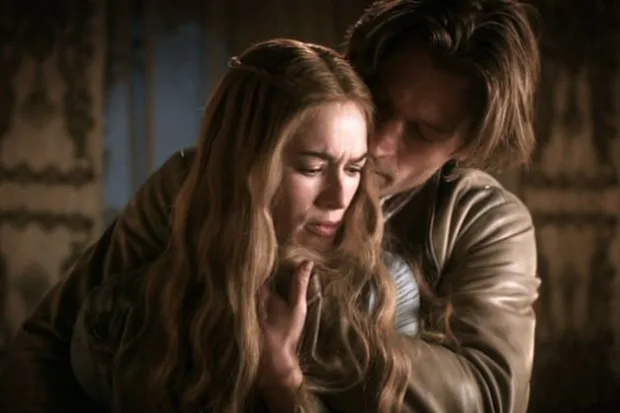
In the Oathkeeper episode of Game of Thrones, Jaime rapes his twin sister/ lover Cersei, a sharp change from the consensual sex portrayed in the book. (Here’s the clip, in case you missed it.) Disturbing relationship dynamics aside, it was a troubling scene. It became even more troubling when the director and writers of the show insisted it depicted consensual sex.
The camera cuts away with Cersei still protesting, “No, stop, it’s not right!” It’s odd that writers would be confused about the definition of such a simple word, but in the English language, “no” denotes the opposite of consent. No consent is rape. And yet the influential men who bring us these ‘love stories’, like David Benioff, D. B. Weiss, and Alex Graves continue to argue about what shouldn’t be arguable, blurring society’s already foggy definition of rape even more.
How have we been tricked into thinking that abuse is a romantic ideal?
50 Shades of Grey did the same thing to abusive relationships. It took a terrible issue faced by too many women in modern society and masked it under an idealized romance that denies the presence of a problem. I’m not talking about the violent sex, though. I’m talking about the clear patterns of emotional abuse that run throughout the story.
Anastasia is frightened of Christian in a way that is never normal or healthy for a relationship. She modifies her actions to avoid making him angry, a behavior typical of someone trapped in an abusive relationship. And the abuse in Christian’s behavior is quite clear: he stalks her, isolates her, and intimidates her. He tracks her whereabouts and restricts how she socializes. But instead of addressing these issues and condemning the abuse, 50 Shades holds up their relationship as an enviable ideal.

Here are a few symptoms of abuse in its various forms (note: this is a very brief list and doesn’t include all signs):
- Apathetic to your feelings / withholding care or attention as punishment
- Constantly betrays your boundaries, like sharing your secrets with others
- They make you feel guilty about wanting to see loved ones
- Thinks you are incapable of most things / they know what is best for you
- They accuse you of untrue things and try to force you into admitting to them
- Embarrasses you on purpose / demeans you in front of other people
- Tries to control you / everything you do, and is eager to point out your flaws
- Hitting / biting / slapping / unwanted physical contact
- Unwanted sexual contact / rape
- Threats of bodily harm or general threats to your person
- Manipulation / making things feel like they are all your fault
All of this sounds like something we’d want to obviously avoid. Yet, these things crop up in tons of media forms — and it’s having a real effect on us. A study showed that women who have read at least one of the 50 Shades trilogy were more likely to get into an emotionally abusive relationship. If that’s not proof that the media impacts our understanding of these issues, I don’t know what is.
What’s worse is that we, as women, are getting manipulated by what we see and read. Women are internalizing these patriarchal ‘ideals’ and this distorted perception of what is ‘sexy’, and self-objectifying. If you get turned on mostly by knowing that you’re turning a man on, instead of the man turning you on, or you focus on the man’s pleasure and arousal more than your own, or you strongly prefer to be dominated rather than loved during sex, then you’ve been affected by this.
A recent US governmental study by the library of medicine explains that self-objectification is “the process whereby individuals who are subjected to such objectification come to internalize the perspective of the outsider. Because objectification is often a gendered process (with women subject to the male gaze), self-objectification occurs more often in women than in men.
Women are internalizing these patriarchal ‘ideals’ and this distorted perception of what is ‘sexy’.
When self-objectification occurs, an individual focuses attention on how her body appears to others rather than on how her body feels and on how she can, using that body, perform actions in the world. The theory predicts several consequences of self-objectification, including body shame, anxiety, eating disorders, depression, and sexual dysfunction.”
Porn doesn’t help the situation (more about that here).
Our shows, books, and movies perpetuate the ridiculous idea that a woman shouting ‘NO!’ isn’t rape and a girl afraid of her partner isn’t abuse. It’s wrong. More than that, it’s dangerous. Sure, it’s just fiction, but the awful link our media draws between love, sex, and violence spills into real life. That means fewer women feeling able to report their assault, less support for survivors, more victim-blaming, and a less educated society. How can we tackle these issues if we don’t acknowledge rape and abuse when we see it?
If you’re still not convinced, check out this article from the male perspective, with tons of examples from popular movies and TV.
Find a way to play your part in this conversation, because the repercussions are simply too awful for the conversation to be limited any longer. Take action, even if it’s something as small as seeing The Last Five Years on Valentine’s Day instead of 50 Shades of Grey. Given the studies showing it increases your chances of being in an abusive relationship, it’s for the best.



Just because someone loves you, doesn’t give them the right to try to make you feel insecure, afraid, and incompetent. You deserve better. You deserve loving that sees you as worthy, important and capable. But sometimes we can’t see the difference between loving that makes you smaller and loving that makes you bigger.
Hi! Great point. People are blind about the truth nowadays…
50 Shades of Gray even provides a reasoning on why Christian behaves that way. They think it’s acceptable that just because he has a sad backstory, it means it’s okay to manipulate women in all sorts of possibilities. I have read somewhere that people were even saying that Anastasia “wanted it”. Don’t we all read or hear the same thing when women get raped or abused? That the woman asked for it? Why would women even want to willingly subject themselves to abuse?! (I’m not going to talk about fetishes here.) I’m just saying that it’s not even normal for a person to actually “ask for it”. So the argument is not even valid to begin with, yet that’s what we hear most of the time.
What we need is a reality check. We need to see the abuse and we need to stop the idea that unhealthy relationships are taboo. We need to be open and honest, to show our younger generations not to idolize such relationships. If we only open up and start talking about these terrible things, just maybe we can put a stop to them.
What I found alarming about Fifty Shades of Grey was the overlap between my experience as an abuse victim and the specific way the audience was being conditioned to accept Christian as a romantic lead.
No matter how smart a woman is, she’s bound to get into an abusive relationship at some point in her life. Mainly because the media makes it so easy for women to turn a blind eye to the situation, making them think they just have high standards for men or that they’re so picky with who they date. Women are always at a loss here. Male authors make it seem like the woman always enjoys being stalked, forced, or I don’t know. There are a lot of media content out there that has made abuse such a normal thing, almost to the point that it’s nothing to complain about, and complaining about it or being against it makes you look like you’re the evil one. I seriously can’t believe how low humans have become just to appease one’s need for pleasure.
In today’s culture, romantic love is everywhere. We see it on the streets, on TV, and in the books. It seems that everyone is looking for it. However, in our search for love, we blur the lines between healthy and unhealthy relationships. We want is so bad that we forget what we truly deserve, and in part, that is all thanks to the media.
In some ways, the film 50 shades of grey is an improvement over the books in that it removes the rape scenes, but in a way, those improvements make it all so much worse because the obviousness of the abuse has disappeared. What’s replaced it is possibly even more dangerous, because it’s easier to argue that what we’re being presented isn’t abusive—it’s romantic.
Media affects the minds of people in such a big way. It starts to influence them to the point that anything shown in the media that is streamlined with love or comedy, it starts to become socially acceptable. Others will find it offensive, others won’t. Others will continue patronizing a show, whether it has negative connotations because the plot means more than that for them. I haven’t even met anyone who hasn’t watched Game of Thrones. Almost everyone in my Facebook newsfeed talks about it, fangirls about it. Whatever was depicted in the show is simply just a ‘part of the story’.
Yes, it all becomes socially acceptable once people start ‘loving’ it.
I’ve been Anastasia Steele in 50 SOG. I’ve been swept off of my feet by what I desperately believed to be–but were not–grand romantic gestures.
It’s the view on the fiction that’s the problem. When we see these stories repeatedly where these things are portrayed as romantic, it contributes to an overall feeling in our culture that these are appropriate ways to behave.