
The summer before my senior year in college, a few friends and I decided to study abroad in Florence. The type of city you’d find on the front of a sepia-toned postcard, the Italian city is undeniably picturesque; with its quaint, cobblestone streets, impressive, looming domes, and petite, rustic skyline, Firenze daintily screams, “dilapidated chic!”
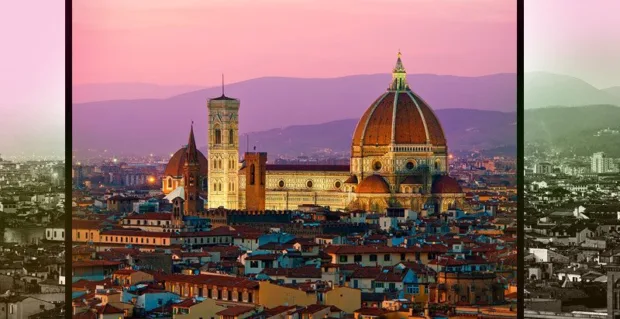
After a week exploring the archaic locale, however, I felt unbearably restless, longing to be immersed in a city with a more palpable pulse. A diehard New Yorker, I was clearly experiencing withdrawal, deprived of the Big Apple’s intoxicating bustle for far too long. I missed being enveloped by shadows of towering concrete and the comforting shrills of traffic streaking outside my window. And I despised the fact that nearly every Florentine store closed well before the sky fell dark.
You can imagine my relief when, two weeks into our underwhelming Tuscan experience, my friends and I decided to spend a long weekend probing a slightly more modern city—one much more akin to the one that never sleeps. It was a trip that would take us two hours south and fifty years back from the past via high-speed train, straight into Italy’s gleaming capital: Rome.
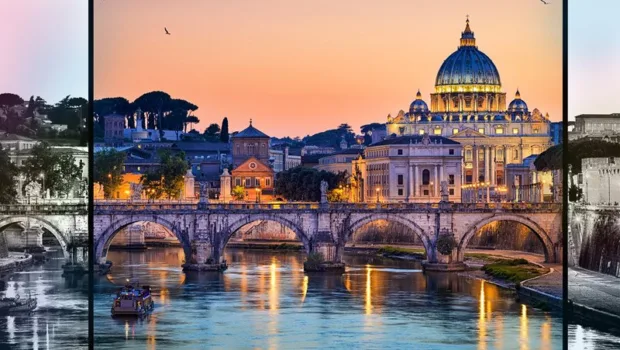
I was ecstatic to discover that The Eternal City—unlike its “quainter” northern sister, Florence—didn’t have a kiddy bedtime. Better yet, it had the modern urban feel I so terribly craved. Peppered with a delightful assortment of locals and spectacular sights, Rome is a mixture of old and new.
We walked from one must-see landmark to the next, only hopping on the underground metro once or twice during our four-day stay. To us New Yorkers, a thirty-minute walk equated to “a stone’s throw away” (we’re really good at throwing stones in New York), so we meandered through Rome on foot, sticky under the blazing sun, but grateful to be back in a place with traffic lights and two-way streets.
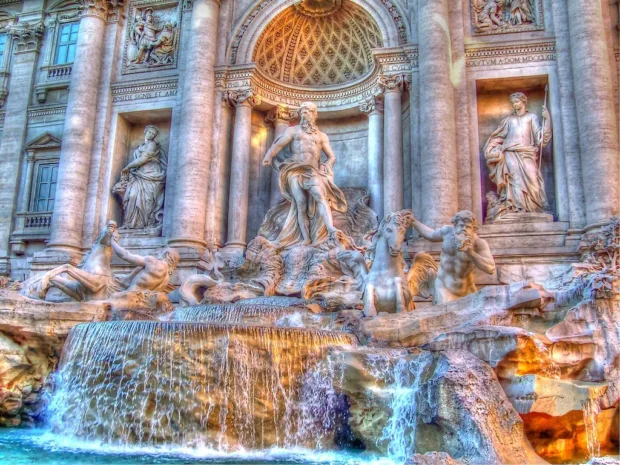
The Trevi Fountain was a toss away from our B&B, so we visited it rather frequently. In the Fountain’s vicinity, we were thrilled to find a line of souvenir shops selling miniature statues of Italian landmarks—from the Colosseum to Pisa’s Leaning Tower—for just a euro a pop, and we stocked up a little too enthusiastically on the small figurines.
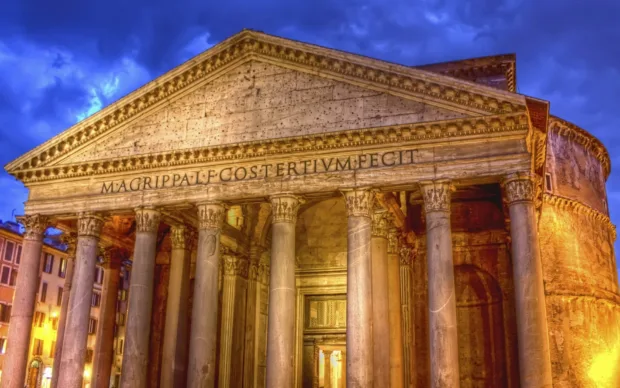
The Pantheon was a mere pebble’s skip from La Fontana di Trevi—Rome’s homage to the ancient gods, the mammoth stone structure is absolutely breathtaking with its commanding, Corinthian columns and extravagant rotunda. It is so painstakingly detailed that, by the time we’d finished marveling at its intricate, golden interior, we were absolutely starved.
Lunchtime was always met with a chorus of “I don’t know!” and “You decide!” as we debated over where to spend our rapidly dwindling euros. Low cost was key—our funds were quite limited, so we sought eateries that advertised buffet deals and discounted combinations.
A quick search on Yelp led us one day to CO2 Brasserie, a wonderfully air-conditioned, two-level restaurant that offers an unlimited buffet of savory food for around twelve euros (about fifteen U.S. dollars). There we dined on a peculiar amalgam of foods, from pasta carbonara and mushroom risotto, to melon balls and delicious desserts.
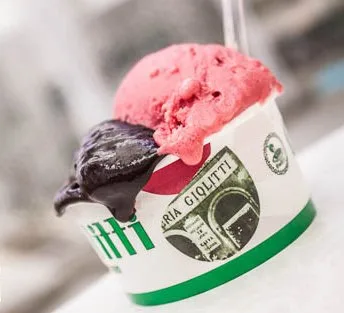
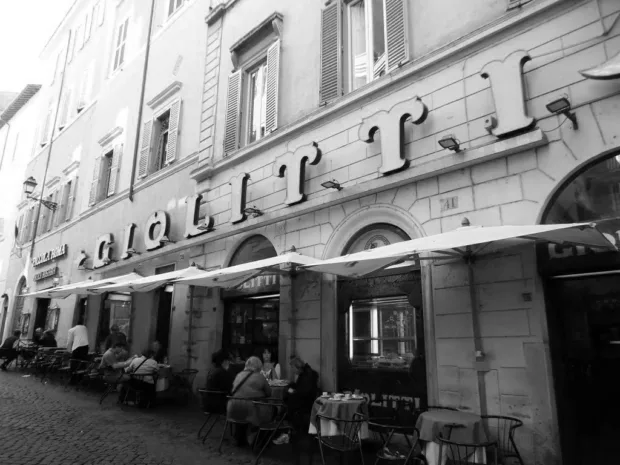
Then, as if our feast wasn’t enough to satiate our bellies, apres-lunch shopping and wandering got us hungry for a sugary snack. We consulted good ol’ Google Maps, which led us to Giolitti, possibly THE most famous cafe and gelateria in all of La Citta Eterna. The charming spot is nestled snugly within the city’s historic district, minutes away from Il Panteon. We bought chocolate-dipped cones piled high with sorbetto, finishing them well within the ten minutes it took us to stroll to Piazza di Spagna.
Lined with gleaming designer boutiques, the famous square was far too pricey a shopping place for our shallow pockets, so we sat on the Spanish Steps and amused ourselves with the funny sight of pushy street vendors attempting to sell roses to passersby, simultaneously trying to evade meandering police.
As guidebook-abiding tourists, we dedicated a full day to The Vatican and St. Peter’s Basilica. Because exposed knees and shoulders are severe obscenities within the Pope’s domain, my best friend and I donned cardigans draped over maxi dresses, while our then-boyfriends suffered through the simmering heat in slacks.
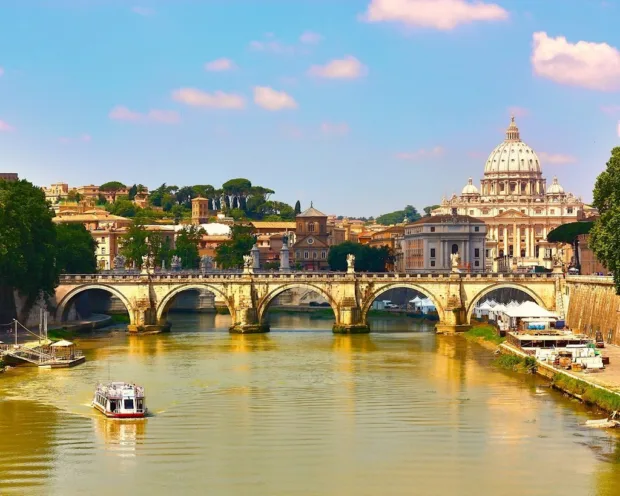
Though no photography was allowed, you can bet I managed to snap a few pictures of The Sistine Chapel’s ceiling (one simply does not fly thousands of miles to see Michelangelo’s magnificent fresco, only to walk away empty-handed!). The highlight of the tour, however, had to be peeping through the keyhole of the Pope’s enormous, wooden front door (unfortunately, I don’t think he was home).
Last but not least, we couldn’t leave Italy’s capital without visiting The Colosseum, quite possibly the most iconic symbol of Rome. We took turns posing alongside gigantic, fallen pillars and decaying stone stumps, all the while trying to fathom the deep history of the stunning arena.
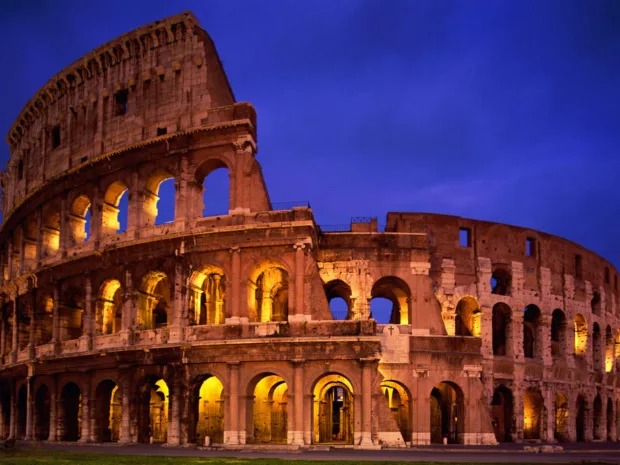
The shockingly well-preserved amphitheater is a testament to the Roman Empire’s love for public spectacles, as it was once the site of bloody gladiator fights and epic chariot races. These days, it simply serves as the city’s greatest tourist attraction (alongside its “brother,” The Roman Forum).
In short, our time in the Eternal City was rich, ephemeral, and sweet—quite like a delectable serving of gelato. A vibrant place brimming with culture and diversity, Rome very much invigorated our spirits, making us wish, long after we’d gone, that we could have just one more scoop.
Want more? Check out A Guided Tour of Rome’s Historical Spots





When in ancient Rome the first attraction that comes to mind and is a must-see is the Colosseum. This place has a lot of history to tell so make sure not to skip
Yeah , all the stories of slave gladiators fighting for entertainment and freedom. really rich history
If you are in Rome, don’t skip the Colosseum. It is an amazing experience! To see this massive structure is overwhelming.
The Vatican is a country of its own, even though it is called ‘city’. This city house the residency of the Pope, St. Piotr Basilica, St. Piotr Square and a number of major attractions.
And also hides the worlds largest library with ancient texts nobody is alowed to study.
After seeing the Trevi Fountain in multiple magazines, movies, and documentaries, there is something surreal about seeing it in person. When walking around Rome, it’s a highlight to be seen.
As amazed as I was at the finished article, still standing after so many years, it was the story of the construction that I found incredible, all explained by my civil engineer tour guide. Pantheon is a wonder to this day why it still stands.
Pantheon is a very special building like others in Rome 🙂 If you wish to see not just a architecture, you should visit there (of course if you’ll have a chance) during a sunny day.
It’s really surprising why it still stands with all that water damage and errosion on the pillars
By sharing your stay in Rome. I feel like I’ve been there already! You have captured my imagination!
There are really so much to see in Rome. It was overwhelming to know their history because it’s full of mysteries. So curious about it!
We go on vacation to Rome every two years and we are definitely going back there again and again… It’s my favorite vacation city! ?
Right! Great idea I will tell my husband to consider visiting Rome also. I’m just hoping that we will agree.
The Vatican is simply amazing and great, a must see place while visiting Rome. World’s smallest country and one of the most beautiful as well.