
I believe I speak for all women, and very few men, when I say I know what it feels like to self-objectify. But how do I know I’m self-objectifying? Well, I ask myself this: “Do I think that the prettier I look, the more lovable I am?” In other words, have I somehow learned that if I get my hair and makeup just right, and if I hide all of the flaws on my body well enough, and if I am passive and doll-like enough, then he’ll fall for me harder or want me more? Well, time to unlearn.
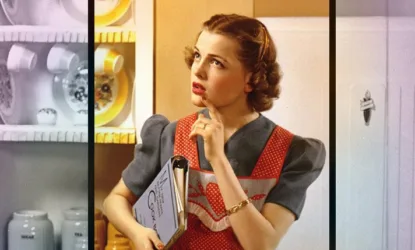
Remember the lyrics to this classic song? It may sound dated because it’s so straight-forward, and marketing is so much more subtle nowadays, but believe me, we’re still getting the exact same message.
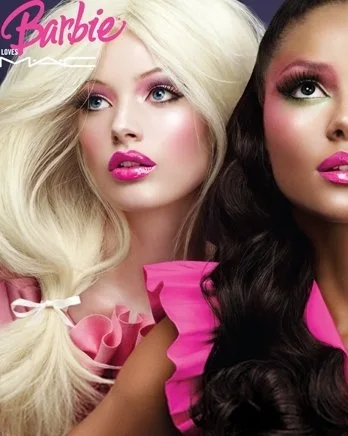
What’s cute about little cutie?
It’s her beauty, not brains
Keep young and beautiful
It’s your duty to be beautiful
Keep young and beautiful
If you want to be loved
Don’t fail to do your stuff
With a little powder and a puff
Keep young and beautiful
If you want to be loved
If you’re wise, exercise all the fat off
Take it off, off of here, off of there
When you’re seen anywhere with your hat off
Wear a Marcel wave in your hair
Take care of all those charms
And you’ll always be in someone’s arms
Keep young and beautiful
If you want to be loved
Sexual objectification is nothing new. We see it every day – in magazines, on television, plastered to the sides of buses. The objectification of women is such an utterly common thing that most people rarely ever notice it (at least consciously). They never really step back and wonder why there’s a half-naked model in that beef jerky commercial, or why breasts are the focal point in that ad for shoes. That’s just how it is, we’re told. It’s human nature.
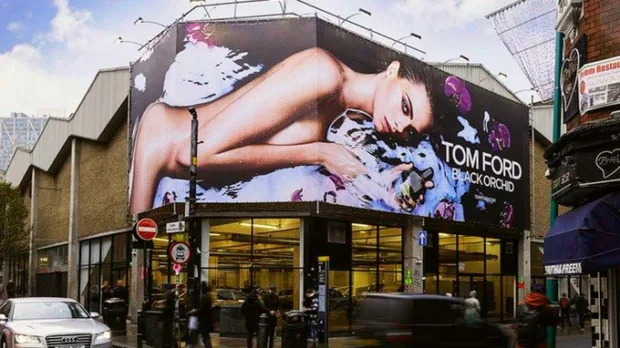
The images we see on billboards and in magazines present the ‘ideal’ image for women, as created by the advertising media. Depicting the ideal woman as young, sensual and “perfect”, the images create the subconscious thought that women are judged according to looks alone. Because the “young, tall, flawless, thin, and hot with a tiny waist, big round boobs and a round butt” ideal is almost always unattainable, real women go through impossible dieting and compulsive cosmetic surgery procedures to become significant in society.

The increasing sexualization of little girls has also led to the increasing rate of teen pregnancy and sexually transmitted diseases. And then, there’s the existence of double standards that expect women to be innocent yet seductive, virginal but experienced.
These same images that objectify women and eroticize violence, often lead to violence against women and a general lack of respect for the gender.
Ads showing women without heads or without faces reduce them to nothing more than loose body parts – choice cuts of meat to salivate over.
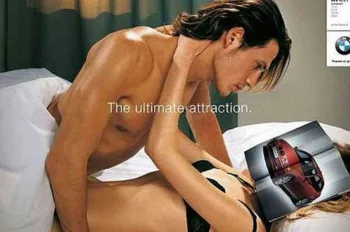
And in the end it’s us, the consumers, who keep the process going. In consuming we only reinforce these crude commercial tactics.
Objectification is a phenomenon that not only changes the way we view models or actresses, but also how we see every woman — and ourselves.
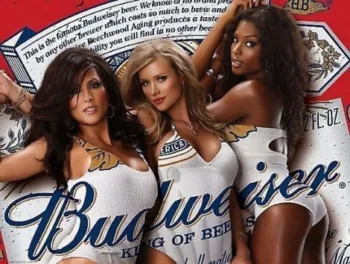
The skyrocketing sales that result from ads that objectify women further affirm to marketers that this method is the way to go, fiscally speaking. It’s easy to imagine how one business, noticing the success of another, might adopt the same advertising model and embrace sexual objectification as a means of selling their products.
It’s a vicious cycle that’s brought society’s view of women to a whole new, perverted level.
And while that old adage ‘sex sells’ may be true when marketing to men, it’s not sex that brands and the media are marketing to women — it’s self-objectification. It’s the idea that in order to be desirable (and, ultimately, lovable), you must act/look/dress/etc. like this (this being the ‘ideal’ du jour). Oh, and if you don’t, well then you’re the only one to blame when you’re an unhappy, unmarried, dowdy 40-something spinster — right? I mean, they told you how to be sexy. You really should have listened! /s
‘Sex sells’ when it comes to men, but self-objectification sells when it comes to women.
We buy glossy magazines that tell us what clothes to wear and what overpriced perfume to buy if we really want to ‘sell ourselves’ and get the guy we want. Through the media, advertisers define what’s sexy and what’s beautiful. They set the standard for every woman; poster girls we all need to measure up to.
But how can we all? Not every woman has a 23-inch waist and a C-cup, and not every woman should! What’s more, these depictions are almost always digitally altered (blemishes concealed, cellulite removed, waist tightened, face reshaped, abs added), making it impossible for anybody to reach this so-called ‘standard of beauty’. No wonder so many women experience debilitating insecurity, self-objectification, depression, eating disorders, and sexual dysfunction after looking at these images.
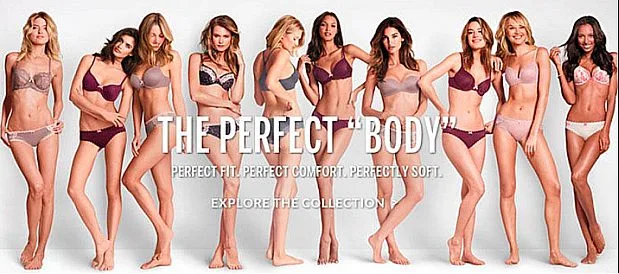
Is it really about teaching women how to be attractive, or is it more about tapping into female insecurities?
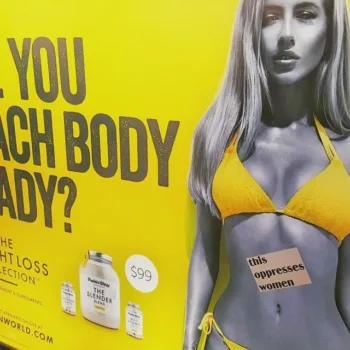
Objectification is what makes girls and women feel the need to look perfect in front of peers and prospective dates. It fuels our insecurity and says, “Hey, you’d be more desirable if only your thighs were more toned, your skin was more tanned, your abs were flatter, and your lips were fuller. Go hit the gym — or just buy this product NOW!”
On the other side of the gender line, it subconsciously gives men the idea that these models are what a really ‘beautiful’ woman should look like. It tells them that they’re not man enough if they can’t ‘score’ with a woman like that. As both women and men begin to internalize these images, they begin believe it’s okay to treat women as objects or tools, and the problem worsens.
So, can you guess where we find most of these objectifying ads? Women’s magazines.
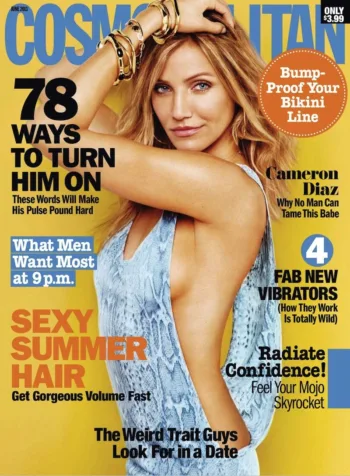
When I was a child, I used to look at the cover of Cosmopolitan and get angry. I couldn’t articulate exactly why, but I knew something was very wrong. Although reactions are varied when it comes to the topic of objectification, most women feel offended, degraded, and disregarded by the way our society accepts this objectification — even if they don’t yet consciously realize why.
Many women feel that worrying about these issues is rewarding, and by transcending these commercial standards of beauty, they can ‘feel sexy’ on their own terms. But it’s hard to argue with the fact that no matter how conscious we are of the facts, our brains have an intellectual side, and a lizard-brain subconscious. And it’s been proven that no matter how educated you are, it’s near impossible to escape the effects of advertising.
We all know women who endorse this messaging and openly self-objectify, not realizing that they are slowly (collectively) damaging not only themselves, but society. While feeling sexy is something every woman should experience, there is a difference between expressing sexuality and being used as sexual object.
A woman’s sexuality is a reflection of her own self-image. It becomes more difficult for women to develop self-confidence when they are regularly bombarded by perverse depictions of the female body.

But in the new MeToo world, this is slowly starting to change. Women are getting educated and choosing to support companies like Aerie (which uses real-ish un-retouched women in their campaigns) while Victoria’s Secret’s sales and runway show viewership is on a downward trend. Sales of magazines like Cosmopolitan are down, and a new breed of unconventional models are becoming well known.
Change can only start if consumers take a stand against sexual objectification by boycotting products of companies that practice it. Hopefully a day will come when women can be confident about their naturally given attributes, rather than worry about the size of their breasts or the circumference of their butts.
Want to learn more? Here are a few great videos:
For more information about the above film, visit their website at MediaEd.org
Below is another great, 8-minute video on the topic (you can watch the full 90-minute film here):
…and a 16-minute TED Talk about this topic:





Great write up and very much in line with my thought process at this time. To put this in fewer words, blatant objectification encourages oppression. To this day women are still valued solely for their bodies, attractiveness or sexual potential by some people.
I have been objectified and I hate it. Women in general are objectified- not just ones considered pretty. Seeing nude women all over magazines objectifies all women.
Attractive women get accustomed to being objectified and it gets tiring. They want to be appreciated for themselves. I do not think any women, attractive or otherwise really wants to be treated in that way.
Yes! It becomes hard to find a man who will see you for YOU, and not just as a trophy. We published an interesting article about this: urbanette.com/hot-girl
I do not agree with anyone, male or female being seen a s asexual object as is common these days. It is not about feminism or jealousy as these guys seem to think. It is a simple matter of respect and decency. I have had attention from men and been told by a guy that he was only with me for my looks. That sort of attention has always made me feel uncomfortable. Men don`t seem to understand that.
Being a human means you deserve respect! Given that they are a good person…. Also, I’m a kind woman and have been objectified and groped when I was doing nothing but having polite conversation. A woman doesn’t have to earn men’s respect to not be objectified.
Thank You, Hilary, for this insightful article. This is the best one on the subject of objectification i have read. I was just chatting about this with a guy colleague over lunch yesterday. He agreed that he feels repulsed by women without a sense of shame.
I’m not trying to claim mitigated responsibility for men that abuse women. I do think, however, that our culture objectifies and sexualises women as the norm, and that representations of women as whole human beings are rare. In this atmosphere, our individual choices are either supporting or challenging that societal norm.
I agree our culture objectifies women as the norm insomuch as we still tend to be represented as “other” in popular culture but, of course, that very atmosphere means there are social consequences for challenging such societal norms entirely. This sometimes makes it hard to pin down whether an individual choice can conclusively be said to support or challenge those norms. It also means the reality for many women in terms of support/challenge is a complex picture full of twists, turns, ruses and compromises.
The other thing that people often say is to chill out, ‘you don’t have to do that, but some women like being objectified’. Well, yes, but that does that mean that I have to pretend I support their choice as wise or even feminist? We don’t live in vacuums, our choices affect other people. If countless women in all kinds of media are presented as objects, some men will view all women as objects, which contributes to women getting really hurt.
It’s also pretty much impossible to do this to men qua men (purely on the quality of them as men, without taking into account any other qualities). It’s not individuals who objectify, it’s an *entire society* including many powerful mechanisms as well as individual actions which, summed, cause objectification. An objectification machine does not exist with men qua men as its target.
I agree with you that whether individual behaviour results in “effective” objectification depends very much on the power structures and systems surrounding the behaviour. That said, I’m not sure it’s true that the machine/society/system couldn’t shift toward objectifying men in addition to women – or perhaps to put it more accurately, since I think societal masculinity standards already contain elements of objectification, evolve to include more sexual objectification of men as well.
That was just what I needed to read this morning. This is not only one of the best blog posts you’ve written, but one of the best I’ve read. Look at the woman’s face in that “Tom Ford” ad. She doesn’t look happy or comfortable with the position she is in. If your model isn’t comfortable with it, you shouldn’t be doing it. 🙁