
If you have been keeping abreast of the latest updates about the cosmetics industry, you probably know by now that most of the mainstream makeup that we use daily, are full of extremely harmful chemicals. Yes – many of the products that we apply on our face can actually cause cancer and serious birth defects.
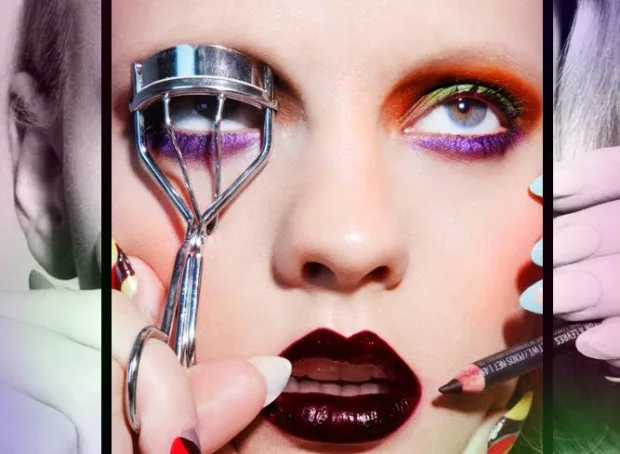
Before we pooh pooh these ideas (after all, how much can a bit of BB Cream or eyeliner hurt you?), we would do well to remember that skin is the largest organ in our body, and 1 in 5 Americans will get skin cancer this year. Would you voluntarily expose this organ to cancer causing chemicals each and every day? I hope the answer is no… Yet, that is what each of us is doing on a daily basis.
Much has been made of the fact that the EU has banned about 1,400 different chemicals from cosmetics and personal care products, while the U.S. has banned a paltry 11.
Yes, we all know that we should be careful about the ingredients that go into our cosmetics and personal care products, but with so many brands flooding the market, how do we decide which products are good for us? Usually, we go for the reputed brands, assuming that such big names will never make a product that will harm our health. And yet, most of the time, these big names are also the biggest offenders. They’re all about maximizing profit, and they have lobbyists and legal teams to cover up their misdeeds.
Most of the major drugstore and department store brands fall woefully short on safety and environmental standards, even though they may be very popular. As a typical example of mainstream cosmetics brands, The Campaign for Safe Cosmetics checked for the most dangerous chemicals that have already been proven to be highly toxic, and found that all of the drugstore and department store products (like Maybelline, Clinique, L’Oreal and similar brands) either openly contained these toxic ingredients, or contained them in secret (as an unlisted ‘contamination’).
The bottom line is that drugstore and department store brand makeup and cosmetics are simply not safe.

As consumers, it is both our right and duty to be mindful about the cosmetics that we use and to ensure that we shun any products which can pose a health hazard to us and our children. Once we start avoiding products that are harmful, we will hit the cosmetic giants where it hurts most –their revenues and bottom lines– forcing them to swap out the most dangerous ingredients for (hopefully) safer ones. It is up to each one of us to make that happen.
According to the Environmental Working Group (EWG), “Nearly 90% of the 10,500 ingredients the FDA has determined are used in personal care products have not been evaluated for safety by the CIR, the FDA or any other publicly accountable institution.”
Fortunately, there are several nonprofits that have taken it upon themselves to analyze and rate the various personal care products that are available in the market. Tools like GoodGuide and the Environmental Working Group’s Skin Deep Database provide critical health information about many consumer items including personal care products. And if you want to check how effective these products are, then sites like Beautypedia and the user reviews on Amazon provide useful information (keep in mind that there are a lot of fake consumer reviews out there!)
Here’s a great video that explains how so many toxins end up in our makeup:
So, the next time you buy any of your favorite makeup, visit a few websites like EWG Skin Deep and GoodGuide and see if they withstand the safety test… or simply purchase products from your health food store that have zero ingredients that sound like chemicals.


When I was pregnant with my first child, I really avoided a lot of cosmetic products. I was so scared to even apply deodorant because of a lot of research about how our body aborbs more than 50% of the product we apply on our skin.
We may not be able to immediately find change in the natural beauty industry, especially as it lacks in diversity. However, with an unstable healthcare system, often marginalizing people of color, I think it is imperative for us to expand our wellness focus by incorporating natural beauty into our self-care lifestyle. Don’t be discouraged with the current lack of diverse brands and products.
When my once flawless skin turned into unmanageable acne overnight in summer of 2016 (special thanks to the $28 primer that almost every beauty magazine listed in their top 10 must-haves), I began to think about the ingredients in that primer that could have caused my skin to reject it. I saw it as if we eat something bad for us, we regurgitate, my skin was doing the same thing. That primer lacked sulfates, parabens, and phthalates so there MUST have been something else! ?
Personal wellness is more than just a fad, it is a lifestyle. Particularly concerning anything “natural”, from foods to skincare cosmetics, we are becoming more aware of how everyday consumptions affect our overall wellness.
Organic natural skin care products are better for the environment because organic farming eliminates the use of synthetic chemicals and fertilizers. Fertilizers and chemicals all have a destructive effect on our water, soil, and health. Organically grown plants also do not have any genetically modified organisms (GMOs) as these may pose a significant threat to both human and environmental health. Therefore, through looking out for your own health, you’re also helping to protect our fragile ecosystem. That is what they call a “win-win” situation.
Reducing exposure to unnecessary irritants that can cause allergies, hormonal and reproductive issues also mean happy, healthy, balanced skin in the longer term. Besides, the inexpensive fillers and preservatives commonly used in conventional products that you are giving up aren’t even making you look better, and can easily be replaced.
You don’t have to sacrifice performance when using organic beauty products. There are a growing number of sophisticated brands that have created expert blends of rare and potent certified organic ingredients to re-balance your skin as well as target specific skin concerns.
For now though, in the absence of good evidence of harm, consumers need to decide for themselves whether the benefits of using products containing these ingredients outweigh any potential risks, and whether these risks are greater than the known lifestyle-related risks such as poor diet, lack of physical activity, excessive alcohol, exposure to sun and occupational hazards. Buying major international brands or at least steering clear of products without an ingredients list, is your best bet if you are concerned.
Seeking change to green products that are pure and clean is worth your time and investment because you are making a difference in your life, your family and the environment.
Organic beauty products are better for your skin because what you put on your skin eventually ends up in your body. You should not put anything on your skin that you couldn’t eat. Your body will understand ingredients from the earth such as sunflower, burdock, calendula and so on. However, once you use something manmade i.e. synthetics, chemicals, etc. on your body, that is when the sensitivities and irritations begin.